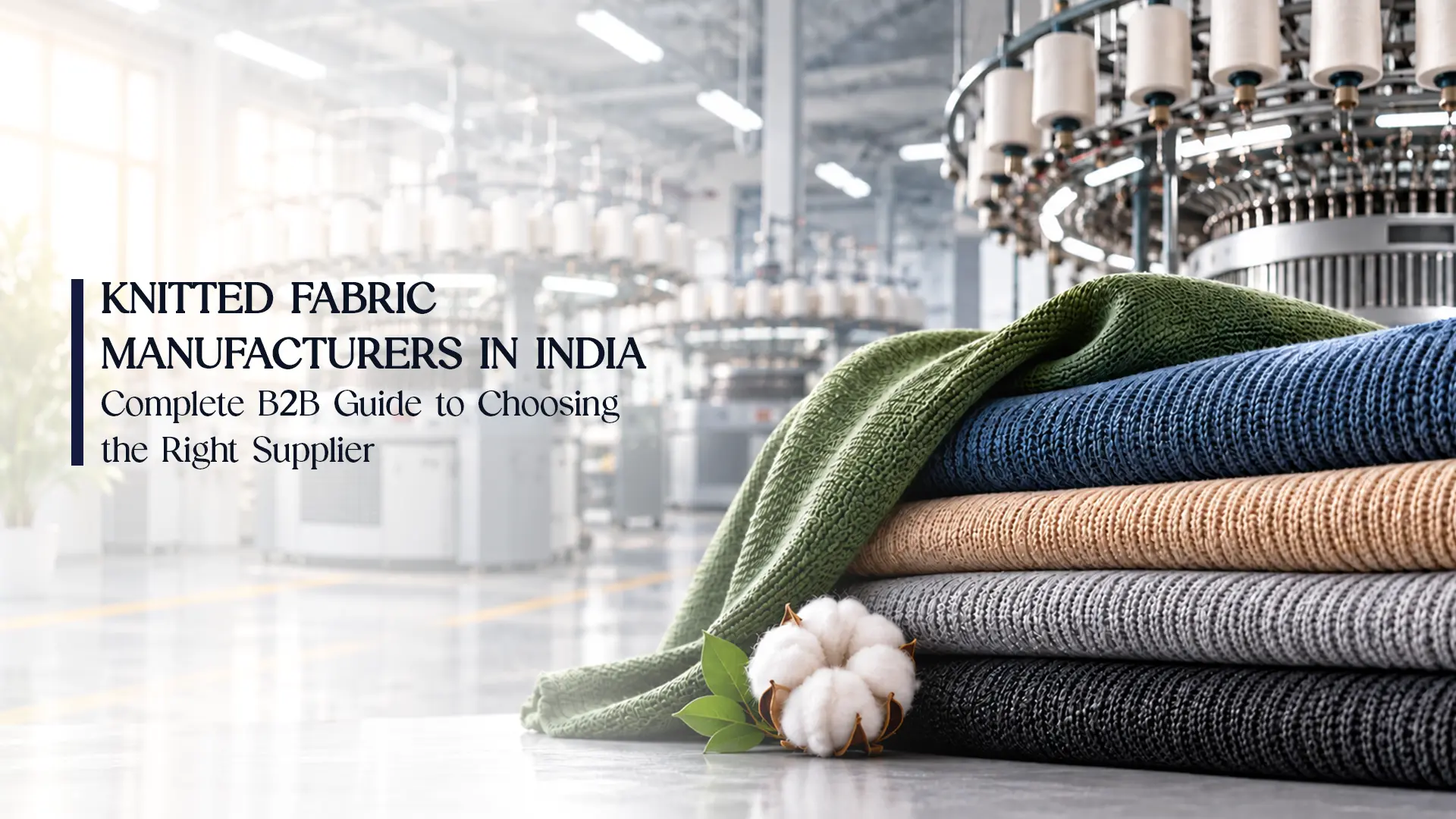
Knitted Fabric Manufacturers in India: Complete B2B Guide to Choosing the Right Supplier
- Kaapd Fabrics
- September 4, 2026
- Polyester Knitted Fabrics, Fabric
- 0 Comments
If you are sourcing fabric for apparel, activewear, home textiles, or private label production, chances are you have already come across dozens of knitted fabric manufacturers in India while researching suppliers online. India’s textile industry has grown into one of the most reliable global sources for knit fabric, and for good reason a mix of scale, skilled labour, competitive pricing, and improving quality standards has made the country a preferred sourcing destination for buyers across Europe, the Middle East, and Southeast Asia. But choosing the right partner among hundreds of options is rarely straightforward. This guide walks through what knitted fabric actually is, why India has become such a strong manufacturing base, and how to evaluate a supplier before you place your first order. If you’re comparing polyester knitted fabric options as part of your sourcing research, this guide will give you the context to make that decision with more confidence.
What Is Knitted Fabric? A Quick Primer for B2B Buyers
Knitted fabric is constructed by interlooping yarns rather than weaving them over and under each other, which is what gives knits their characteristic stretch, softness, and drape. This is the fundamental difference between knitted and woven fabric — knits move with the body, recover their shape after stretching, and generally feel more comfortable against the skin, which is why they dominate categories like t-shirts, activewear, innerwear, and kidswear. Woven fabric, by contrast, has a fixed grain and offers more structure but almost no natural stretch.
Within knits, buyers typically encounter a handful of common constructions. Single jersey is the lightest and most widely used, often seen in basic t-shirts. Rib knit has visible vertical ridges and is common in collars, cuffs, and fitted garments. Interlock is a double-knit variety that feels heavier and more stable, often used in premium t-shirts and dresses. Pique, recognisable from polo shirts, has a slightly textured surface. Understanding these basic types before you approach any supplier makes the entire sourcing conversation far more efficient, since specifications like GSM, stretch percentage, and finish all depend on which construction you need.

Why India Is a Leading Hub for Knitted Fabric Manufacturing
India’s position as a global textile sourcing destination did not happen overnight. The country has an integrated supply chain running from raw material (cotton, polyester yarn, blended fibres) through spinning, knitting, dyeing, and finishing, often within the same industrial cluster. This vertical integration is one of the biggest reasons international buyers continue to work with knitted fabric manufacturers in India rather than sourcing from fragmented supply chains elsewhere.
Certain regions have developed deep specialisation over decades. Tirupur in Tamil Nadu is often called the knitwear capital of India and handles a large share of the country’s cotton knit exports. Surat and Ahmedabad in Gujarat have built strong expertise in polyester and synthetic knits, driven by proximity to man-made fibre production. Ludhiana in Punjab is known for woollen and winterwear knits, while Kolkata has a long-standing hosiery manufacturing base. Each cluster brings its own strengths, so the “best” region often depends on the specific fabric type and end use you’re sourcing for.
Cost competitiveness plays a role too, but it is no longer the only factor buyers weigh. Many Indian knitted fabric suppliers have invested in compliance and testing infrastructure to meet international requirements — certifications like OEKO-TEX Standard 100 for chemical safety, GOTS for organic content, and GRS for recycled materials are increasingly common among export-oriented mills. For buyers with sustainability commitments further up their own supply chain, this shift matters as much as price.
Types of Knitted Fabric Manufacturers in India
Not every supplier operates the same way, and understanding these categories early helps narrow your search. Some manufacturers specialise in weft knitting, which is the more common method used for jersey, rib, and interlock fabrics and is generally faster and more flexible for shorter runs. Others focus on warp knitting, which produces fabrics like tricot and raschel knits used more often in technical textiles, lace, and certain activewear applications this process typically favours larger production volumes.
There is also a distinction between greige (unfinished, undyed) fabric suppliers and those offering fully finished, dyed, or printed fabric ready for cut-and-sew. Buyers who have their own dyeing or printing partners downstream may prefer sourcing greige from knitted fabric manufacturers in India and managing finishing separately, while brands without that infrastructure usually look for a one-stop supplier who can deliver finished rolls.
Finally, some mills work primarily on bulk stock programs with standard colours and constructions, while others are set up for custom or private label development adjusting GSM, blend ratios, colours, and finishes to a buyer’s exact specification. If your product depends on a unique fabric feel or performance attribute, it’s worth confirming early whether a manufacturer actually supports custom development or only sells from existing stock.

Key Industries That Source Knitted Fabric
Knit fabric touches a wide range of end uses, and the specific requirements shift depending on the industry. Apparel and general garment manufacturing remain the largest consumers, spanning everything from casualwear to fashion basics, where softness, colour consistency, and shrinkage control matter most. Activewear and sportswear brands look for performance-oriented knits moisture-wicking finishes, four-way stretch, and durability under repeated washing are typically non-negotiable here, and this is an area where many knitted fabric manufacturers in India have built dedicated capacity in recent years.
Home textiles is another growing category, using knit constructions for products like bedding, towelling blends, and certain upholstery applications. There is also a smaller but steady demand from technical textiles medical, automotive interior, and industrial applications where knit fabric’s stretch and breathability offer functional advantages over woven alternatives. If your sourcing need falls into a more specialised category like sportswear fabric, it’s worth looking specifically for suppliers who list that as a core specialisation rather than a side offering, since the testing and finishing requirements differ meaningfully from basic apparel fabric.
How to Evaluate a Knitted Fabric Manufacturer in India
Once you have a shortlist of knitted fabric manufacturers in India, the evaluation process is where most sourcing mistakes get avoided or made. Production capacity is the obvious starting point, a mill’s monthly output tells you whether they can realistically support your order volumes, but it’s equally important to ask about minimum order quantity, since many manufacturers set MOQs that work for large brands but exclude smaller or first-time buyers. It is worth asking directly rather than assuming, since MOQ policies vary widely even within the same cluster.
Quality certifications and in-house lab testing are worth verifying rather than taking at face value. Ask what specific tests a manufacturer runs, colour fastness, pilling resistance, shrinkage, and GSM consistency are the basics, and whether they can share test reports for past production batches. A manufacturer that is transparent about testing data is usually one that takes quality seriously.
Sampling is another area that separates dependable knitted fabric suppliers from the rest. Ask how long sample development typically takes, whether sample costs are charged or credited against bulk orders, and how closely their sample output tends to match final bulk production, inconsistency between sample and bulk quality is a common and frustrating issue in fabric sourcing. Finally, pricing transparency and clear payment terms matter as much as the fabric itself. A supplier who is upfront about cost breakdowns, lead times, and payment structure from the first conversation is generally easier to build a long-term relationship with than one who keeps quoting vague.
Red Flags to Watch Out for When Sourcing
A few warning signs tend to repeat across sourcing experiences, and they are worth watching for regardless of how strong a supplier’s marketing or website looks. Inconsistent GSM or unexpected shrinkage between sample and bulk batches is one of the most common complaints buyers raise, and it usually points to weak quality control processes rather than a one-off error. Suppliers who cannot provide any verifiable client references, export history, or third-party testing documentation should be approached cautiously, particularly for larger first orders. It’s reasonable to ask for both, and a credible manufacturer will not hesitate to share them.
Vague or shifting lead time commitments are another signal worth taking seriously. Some knitted fabric manufacturers in India quote optimistic timelines during negotiation and then extend them once an order is confirmed, which can disrupt production schedules further down your own supply chain. Asking for a written production and dispatch timeline, rather than a verbal estimate, is a simple way to hold a supplier accountable and avoid last-minute surprises closer to your own delivery deadlines.
Questions to Ask Before Placing Your First Order
Before committing to any of the knitted fabric manufacturers in India on your shortlist, a short set of direct questions can save significant time and cost later:
What is your minimum order quantity per fabric type and colour?
Can you share recent test reports or certifications relevant to my product category?
What is your typical sampling timeline, and is sample cost adjusted against bulk orders?
What payment terms and lead times apply to a first-time buyer versus a repeat client?
Getting clear answers to these questions upfront tends to reveal a lot about how a supplier operates, often more than any amount of website research can. Visit us.

Conclusion
India’s textile clusters offer genuine depth and specialisation, but sourcing well still comes down to doing the homework, understanding fabric types, knowing which region and manufacturer type fits your product, and asking the right questions before committing to an order. Working with established knitted fabric manufacturers in India who are transparent about certifications, testing, and production capacity will save far more time and cost than choosing on price alone. If you’re evaluating suppliers for polyester knit fabric specifically, Kaapd works with B2B buyers across apparel, activewear, and private label categories and can walk you through fabric options suited to your product and volume,reach out to discuss your requirements.
Frequently Asked Questions (FAQs)
MOQs vary widely by manufacturer and fabric type, ranging from a few hundred kilograms for smaller mills to several tonnes for large-scale producers. It’s best to confirm this directly rather than assume a standard figure across suppliers.
Most knitted fabric suppliers in India take anywhere from 7 to 15 days for sample development, depending on whether the fabric requires custom dyeing or finishing.
Many manufacturers that focus on private label or custom development can adjust GSM, colour, and fibre blend, but this typically requires higher order volumes than standard stock fabric. Always confirm customisation capability and any related minimums before finalising a supplier.
Related Posts

- Kaapd Fabrics
- July 25, 2026
Why Fast Fabric Sampling Helps Garment Manufacturers Launch Collections Faster
Building an apparel brand today is not easy. ..

- Kaapd Fabrics
- July 11, 2026
Common Fabric Quality Problems in Bulk Orders (And How to Avoid Them)
Building an apparel brand today is not easy. ..

- Kaapd Fabrics
- October 23, 2026
Fake Cotton vs Real Cotton Fabric: Cost, Feel, and Which Garments Each Suits
Building an apparel brand today is not easy. ..


