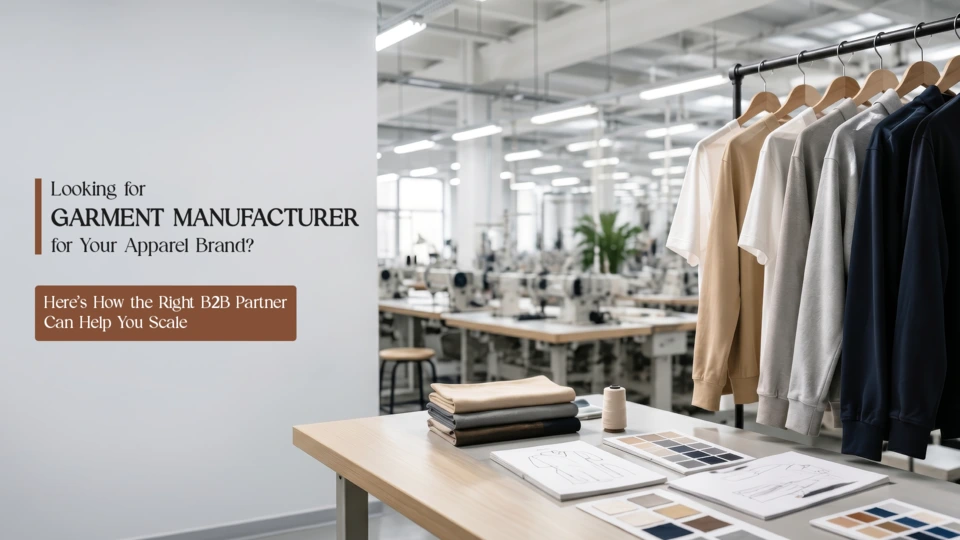
Looking for Garment Manufacturers for Your Apparel Brand? Here’s How the Right B2B Partner Can Help You Scale
- Kaapd Fabrics
- May 30, 2026
- Polyester Knitted Fabrics, Fabric
- 0 Comments
Introduction: Why Apparel Brands Need the Right Manufacturing Partner
Building an apparel brand today is not easy.
Even if your designs and marketing are strong, your brand can still struggle because of poor production quality, delayed deliveries, inconsistent sizing, or unreliable suppliers.
This is why modern apparel businesses are increasingly looking for garment manufacturers for brand growth instead of relying on basic suppliers.
Today’s fashion brands want manufacturing partners who can support:
- Product quality consistency
- Faster production timelines
- Low MOQ manufacturing
- Fabric sourcing support
- Better communication
- Scalable bulk production
- Custom clothing development
Whether you run a streetwear label, activewear brand, D2C fashion startup, ethnic wear business, or premium clothing line, the right manufacturer directly impacts customer satisfaction and long-term brand growth.
A strong manufacturing partner helps apparel brands launch collections faster, maintain quality standards, and scale operations more smoothly.
Why Apparel Brands Need Strategic Manufacturing Partnerships
Many apparel brands make the mistake of changing suppliers frequently.
This often creates:
- Quality inconsistency
- Delayed production
- Communication problems
- Inventory issues
- Higher operational stress
Successful apparel brands usually work with long-term B2B clothing manufacturers who understand their designs, customer expectations, and production standards.
Strong manufacturing partnerships help apparel brands:
- Launch collections faster
- Maintain product consistency
- Improve customer trust
- Handle seasonal demand
- Scale production smoothly
- Reduce operational errors
For growing apparel brands, a reliable custom clothing manufacturing partner becomes an important part of long-term business success.
What Apparel Brands Look for in Garment Manufacturers
Today’s apparel brands expect much more than basic stitching services.
They look for manufacturers who can support complete apparel development.
1. Consistent Product Quality
One of the biggest reasons brands lose customers is inconsistent quality.
Professional B2B clothing manufacturers maintain quality checks during:
- Fabric inspection
- Cutting
- Stitching
- Printing
- Finishing
- Packaging
Consistent quality helps brands reduce returns and improve customer trust.
2. Flexible MOQ Support
Many startup and D2C fashion brands cannot invest in large inventories initially.
This is why a low MOQ clothing manufacturer becomes highly valuable.
Low MOQ production allows brands to:
- Test new collections
- Reduce inventory risks
- Launch seasonal designs faster
- Experiment with market demand
This flexibility is especially important for growing fashion startups.
3. Fabric Sourcing Capabilities
Fabric quality directly impacts garment quality.
Reliable manufacturers support brands with proper fabric sourcing based on:
- Budget
- Design requirements
- Durability
- Comfort
- Sustainability goals
For example, many activewear and casualwear brands prefer polyester knitted fabric because of its durability, flexibility, and lightweight properties.
Strong fabric sourcing networks also help reduce production delays.
4. Strong Communication Systems
Communication is one of the most overlooked factors in garment manufacturing.
Experienced custom clothing manufacturers provide:
- Regular production updates
- Sampling progress reports
- Clear timelines
- Faster responses
- Transparent costing
Good communication reduces confusion and helps projects move smoothly.
How the Right Manufacturing Partner Helps Apparel Brands Grow
Faster Product Launches
Fashion trends move quickly.
Brands that launch products faster often gain better market attention.
An experienced custom clothing manufacturing partner helps reduce:
- Sampling delays
- Fabric sourcing time
- Production errors
- Rework issues
This improves speed-to-market.
Better Production Scalability
As brands grow, production requirements also increase.
- Reliable manufacturers support:
- Bulk order management
- Seasonal production spikes
- Multi-category production
- Export-scale operations
This makes scaling easier without compromising quality.
Improved Cost Efficiency
Efficient manufacturing systems help reduce:
- Fabric wastage
- Production downtime
- Defect rates
- Operational inefficiencies
This improves overall profitability for fashion brands.
Real Apparel Brand and Manufacturer Collaboration Examples
Adding real examples helps understand how strong manufacturing partnerships create business growth.
Example 1: Zara’s Fast Fashion Manufacturing Model
Zara became one of the world’s biggest fashion brands because of its highly responsive manufacturing network.
Instead of depending only on distant suppliers, Zara works closely with manufacturing partners that can quickly produce smaller batches and respond to market trends.
This allows Zara to:
- Launch designs quickly
- Reduce unsold inventory
- Respond faster to fashion trends
- Improve production flexibility
This example shows why modern brands prefer manufacturers with fast turnaround times and scalable production systems.
Example 2: Nike’s Manufacturing Innovation Partnerships
Nike works closely with specialized manufacturing partners to improve product innovation and performance.
Its Flyknit technology was developed through long-term collaboration with advanced knitting manufacturers.
These partnerships helped Nike:
- Reduce material waste
- Improve product performance
- Increase production efficiency
- Maintain product consistency globally
This shows how strategic manufacturing partnerships can support both innovation and scalability.
Example 3: D2C Apparel Brands Using Low MOQ Manufacturing
Many growing apparel startups now prefer low MOQ clothing manufacturers because they want flexibility during the early growth stage.
Instead of investing heavily in large inventories, these apparel brands launch smaller collections first to test:
- Customer demand
- Trending styles
- Seasonal collections
- Product-market fit
- This approach helps brands:
- Reduce inventory risk
- Control cash flow
- Launch products faster
- Experiment with new designs
Because of this shift, flexible garment manufacturers for brand growth are becoming highly valuable for modern apparel businesses.
Why Sustainable Manufacturing is Becoming Important
Today’s customers are becoming more aware of ethical and sustainable fashion practices.
As a result, brands are actively searching for a sustainable clothing production company that follows responsible manufacturing methods.
Sustainable manufacturing may include:
- Organic fabrics
- Eco-friendly dyes
- Reduced water usage
- Ethical labor practices
- Waste reduction systems
Brands that focus on sustainability often build stronger customer trust and long-term brand value.
Common Problems Apparel Brands Face With Poor Manufacturers
Many brands choose suppliers only based on low pricing.
However, low-cost production can create bigger operational problems later.
- Common issues include:
- Delayed shipments
- Poor finishing quality
- Fabric inconsistencies
- Communication gaps
- Incorrect sizing
- Lack of production transparency
- Inability to scale
These issues directly impact customer satisfaction and brand reputation.
This is why selecting the right garment manufacturers for brand growth is extremely important.
How Garment Manufacturers Can Attract More Brands
Build a Strong Portfolio
Include:
- Product photos
- Fabric expertise
- Manufacturing capabilities
- Certifications
- MOQ flexibility
- Client case studies
Improve Digital Presence
Modern fashion brands search online before selecting manufacturing partners.
Manufacturers should invest in:
- SEO-optimized websites
- LinkedIn presence
- Case-study content
- Manufacturing process videos
- Educational blogs
This improves credibility and lead generation.
Offer Value-Added Services
Manufacturers that provide additional support stand out more.
Examples include:
- Sampling support
- Tech pack guidance
- Fabric sourcing assistance
- Packaging solutions
- Private labeling
This positions the factory as a strategic custom clothing manufacturing partner instead of just a supplier.
Future Trends in Garment Manufacturing
The garment industry is evolving rapidly.
Manufacturers who adapt early will grow faster.
Some major trends include:
- Sustainable production
- Low MOQ manufacturing
- Faster turnaround production
- Digital sampling
- AI-driven inventory planning
- Smart textile innovations
- Ethical sourcing transparency
Fashion brands now prefer manufacturing partners who are flexible, technology-driven, and future-focused.
Conclusion
For modern apparel brands, choosing the right manufacturing partner is no longer just about production capacity.
It is about finding a long-term partner who understands your brand goals, product quality expectations, target customers, and growth plans.
Reliable garment manufacturers for brand growth help apparel businesses:
- Improve product consistency
- Launch collections faster
- Reduce operational issues
- Scale production efficiently
- Maintain customer satisfaction
Whether you are building a streetwear label, sportswear brand, women’s fashion line, or private-label clothing business, the right B2B clothing manufacturers can directly influence your long-term success.
The future of the apparel industry belongs to brands and manufacturers that grow together through strong communication, flexibility, quality control, and innovation. Connect with us.
Wholesale Fabric Supplier in India FAQ
Fabric sourcing directly affects garment quality, comfort, durability, and production consistency. Manufacturers with strong sourcing capabilities help apparel brands maintain better product quality and smoother production workflows.
Related Posts

- Kaapd Fabrics
- May 18, 2026
How to Choose the Right Active Wear Manufacturer in India for Your Fitness Brand
Starting a fitness or sportswear brand sounds exciting, but one of the most important decisions ..

- Kaapd Fabrics
- May 18, 2026
How to Evaluate Polyester Knitted Fabric GSM: A Guide for Brands and Wholesalers
Introduction Polyester knitted fabrics are widely used in the fashion, sportswear, and textile ..

- Kaapd Fabrics
- February 19, 2026
How to Select a Premium Polyester Knitted Fabrics Manufacturer for Brands and Wholesalers?
Table of Contents Introduction What are premium polyester knitted fabrics? Key factors t ..


