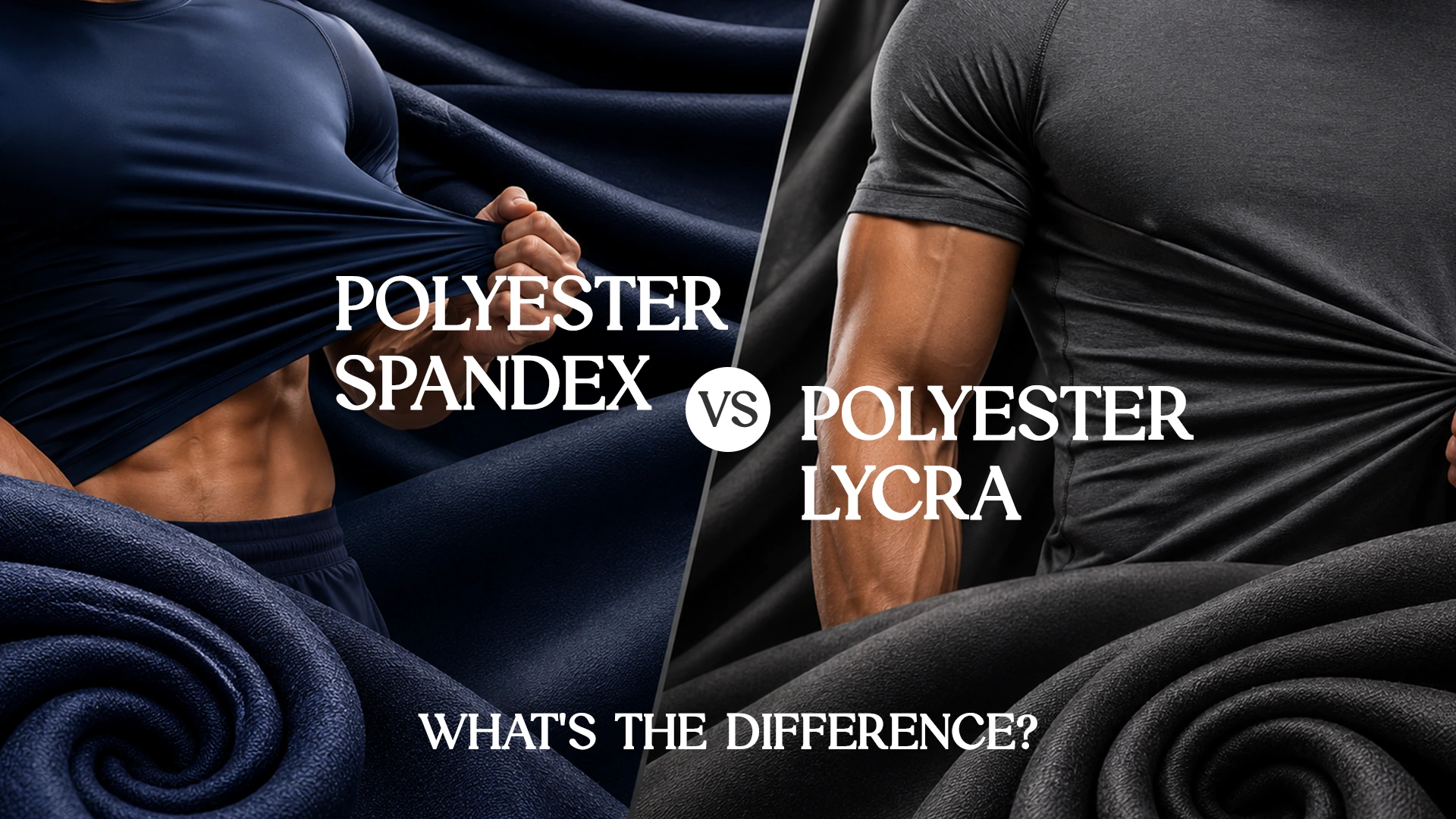
Polyester Spandex vs Polyester Lycra: What’s the Difference?
- Kaapd Fabrics
- June 19, 2026
- Polyester Knitted Fabrics, Fabric
- 0 Comments
Introduction
If you’re sourcing fabrics for sportswear, activewear, leggings, yoga wear, or performance apparel, you’ve probably come across the terms Polyester Spandex and Polyester Lycra. They are often used interchangeably by suppliers, manufacturers, and even buyers. As a result, many apparel brands and sourcing managers assume they are completely different fabrics.
The reality is more nuanced.
When comparing Polyester Spandex vs Polyester Lycra, the difference is not as straightforward as one fabric being better than the other. Both fabrics are widely used across the sportswear and activewear industry because they offer stretch, comfort, durability, and moisture management. However, their performance can vary depending on fiber quality, fabric construction, and the intended application.
For a sportswear startup launching its first collection, Polyester Spandex may be the perfect solution. For a premium activewear brand selling high-performance leggings and yoga apparel, Polyester Lycra may provide additional advantages. Understanding these differences can help manufacturers, sourcing managers, and fabric buyers make smarter purchasing decisions while avoiding costly product development mistakes.
In this guide, we’ll take a closer look at the difference between Polyester Spandex and Polyester Lycra, explore how each fabric performs in real-world applications, and help you determine which option is best suited to your next sportswear or activewear collection.
Understanding Polyester Spandex Fabric
Polyester Spandex Fabric has become one of the most widely used materials in the global sportswear industry. From gym T-shirts and running shorts to compression wear and leggings, this fabric combination offers the performance characteristics modern consumers expect.
At its core, Polyester Spandex Fabric combines polyester fibers with elastane fibers, commonly referred to as spandex. Polyester provides durability, moisture management, wrinkle resistance, and color retention, while spandex contributes elasticity and flexibility.
This combination creates a fabric that moves naturally with the body while maintaining its structure during physical activity.
What makes Polyester Spandex particularly attractive is its versatility. Manufacturers can adjust the percentage of elastane, modify the knitting structure, and apply different finishing treatments to create fabrics suitable for a wide range of applications.
A lightweight Polyester Spandex fabric may be used for running apparel, while a heavier version can be engineered for squat-proof leggings or compression garments.
Because of its flexibility and affordability, Polyester Spandex Fabric is commonly used in:
- Sportswear
- Activewear
- Gym wear
- Running apparel
- Training clothing
- Team uniforms
- Cycling apparel
- Athleisure garments
- Compression wear
Many sportswear brands prefer Polyester Spandex because it offers a strong balance between performance and cost. This makes it particularly suitable for brands targeting mass-market and mid-range consumers.
What Is Polyester Lycra Fabric?
To properly understand Polyester Spandex vs Polyester Lycra, it’s important to clarify what Lycra actually is.
One of the most common misconceptions in the textile industry is that Lycra is a separate fiber category. In reality, Lycra is a branded elastane fiber. Spandex is the generic fiber classification, while Lycra is a premium elastane brand known for its consistency and quality standards.
In simple terms:
All Lycra is Spandex, but not all Spandex is Lycra.
Polyester Lycra Fabric combines polyester fibers with Lycra elastane fibers. The polyester component performs the same function it does in Polyester Spandex Fabric, providing durability, strength, and moisture management. The difference lies in the elastane component.
Many premium apparel brands choose Polyester Lycra Fabric because it is associated with reliable stretch recovery, long-term shape retention, and consistent performance.
This is especially important in categories where fit is critical. A consumer buying premium leggings or yoga wear expects the garment to maintain its shape even after months of workouts and repeated washing cycles.
Because of these expectations, Polyester Lycra Fabric is often used in:
- Premium activewear
- Yoga apparel
- Performance leggings
- Compression garments
- Cycling shorts
- High-end sportswear
- Athletic training apparel
While the performance differences may not always be dramatic, consistency is often the key advantage.
Is Lycra Different From Spandex?
This question creates more confusion than almost any other topic in sportswear fabric sourcing.
The answer is surprisingly simple.
Spandex is the generic name used for elastane fibers. Lycra is a branded version of elastane. The relationship is similar to how people use brand names to describe products within a larger category.
When discussing Spandex vs Lycra Fabric, many buyers assume Lycra automatically performs better. While Lycra is associated with strict quality standards, overall fabric performance still depends on several factors, including yarn quality, knitting structure, fabric weight, finishing processes, and manufacturing expertise.
A high-quality Polyester Spandex fabric can outperform a poorly constructed Polyester Lycra fabric.
This is why experienced sourcing managers evaluate complete fabric specifications rather than focusing exclusively on fiber branding.
Polyester Spandex vs Polyester Lycra Stretchability
When buyers compare Polyester Spandex vs Polyester Lycra Stretchability, they often focus only on how far the fabric can stretch.
However, stretchability is only one part of the equation.
The more important factor is recovery.
Recovery refers to a fabric’s ability to return to its original dimensions after being stretched. A fabric may stretch extremely well, but if it fails to recover properly, the garment can become loose, saggy, or misshapen over time.
This is particularly important for:
- Leggings
- Yoga pants
- Compression wear
- Cycling apparel
- Athletic tights
Both Polyester Spandex and Polyester Lycra offer excellent flexibility and freedom of movement. Most modern sportswear fabrics in either category are capable of providing four-way stretch, allowing garments to move comfortably in multiple directions.
Where differences may appear is in long-term recovery performance. Premium Lycra-based fabrics are often selected because they maintain elasticity more consistently over extended periods of use.
For consumers, this means garments continue fitting properly even after repeated workouts and washing cycles.
Moisture Management and Comfort
Comfort is one of the most important factors influencing activewear purchasing decisions.
No matter how stylish a garment looks, consumers are unlikely to repurchase if it feels uncomfortable during exercise.
Fortunately, both Polyester Spandex and Polyester Lycra perform exceptionally well in moisture management applications because polyester fibers naturally support sweat transportation and quick drying.
During exercise, moisture is moved away from the skin and distributed across the fabric surface, where it can evaporate more efficiently.
This process helps athletes stay comfortable during:
- Running
- Gym workouts
- Cycling sessions
- Yoga practice
- Outdoor training
When discussing Polyester Spandex vs Polyester Lycra Comfort, most differences come from fabric construction rather than the elastane brand itself.
Factors that influence comfort include:
- Fabric GSM
- Knit structure
- Yarn quality
- Surface finishing
- Fabric density
A lightweight circular knit fabric may feel significantly different from a heavier compression fabric, even if both contain identical elastane content.
For this reason, textile buyers should always request fabric samples before making sourcing decisions.
Polyester Spandex vs Polyester Lycra Durability
Durability is one of the most important considerations for sportswear brands.
Consumers expect activewear garments to withstand frequent workouts, repeated washing, and continuous stretching without losing their appearance or functionality.
When evaluating Polyester Spandex vs Polyester Lycra Durability, buyers should focus on long-term performance rather than initial impressions.
Polyester fibers already offer excellent durability, abrasion resistance, and color retention. The main difference often lies in how effectively the elastane component maintains its elasticity over time.
In premium applications, Polyester Lycra fabrics may demonstrate better recovery after repeated stretching cycles. This can help garments maintain their fit longer and reduce issues such as bagging or sagging.
However, many high-quality Polyester Spandex fabrics also deliver outstanding durability when sourced from reliable manufacturers.
The key takeaway is that supplier quality often matters more than branding alone.
Polyester Spandex vs Polyester Lycra for Sportswear
Choosing between Polyester Spandex vs Polyester Lycra for Sportswear depends heavily on the target consumer and intended product category.
For large-scale sportswear production, Polyester Spandex often provides the ideal combination of affordability, performance, and scalability.
It is commonly used in:
- Sports jerseys
- Training apparel
- Running shirts
- Athletic shorts
- Team uniforms
For premium sportswear collections, manufacturers may prefer Polyester Lycra because of its enhanced recovery performance and premium market perception.
Cycling apparel, compression garments, and high-performance athletic wear often benefit from these additional performance characteristics.
The decision ultimately comes down to balancing product requirements with business objectives.
Polyester Spandex vs Polyester Lycra for Activewear
The activewear market has evolved far beyond basic workout clothing.
Consumers now expect activewear garments to function equally well inside and outside the gym. As a result, brands are placing greater emphasis on fit retention, comfort, and long-term performance.
When comparing Polyester Spandex vs Polyester Lycra for Activewear, there is no universal winner.
For value-oriented brands, Polyester Spandex often delivers excellent results while maintaining competitive pricing.
For premium activewear brands targeting consumers who expect exceptional fit and durability, Polyester Lycra may provide additional value.
The most successful activewear manufacturers typically select fabrics based on product-specific performance requirements rather than marketing terminology.
Polyester Spandex Fabric for Leggings
Leggings are among the most technically demanding products in activewear manufacturing.
Consumers expect them to be flexible, comfortable, supportive, and durable. They must also provide sufficient coverage during stretching and movement.
A high-quality Polyester Spandex Fabric for Leggings should offer:
- Four-way stretch
- Strong recovery
- Moisture management
- Squat-proof coverage
- Comfortable compression
Many successful leggings collections use Polyester Spandex because it delivers excellent performance while remaining cost-effective.
However, premium leggings often incorporate higher-grade elastane solutions to maximize shape retention and recovery.
Polyester Lycra Fabric for Yoga Wear
Yoga apparel requires exceptional flexibility because garments must accommodate deep stretches, twists, and extended movement.
This is one reason Polyester Lycra Fabric for Yoga Wear remains popular among premium brands.
Yoga consumers typically place significant emphasis on:
- Comfort
- Softness
- Fit
- Flexibility
- Shape retention
Because recovery performance directly affects garment fit, many premium yoga wear manufacturers choose Lycra-based fabrics to support long-term product quality.
Which Is Better Polyester Spandex or Polyester Lycra?
One of the most common sourcing questions is: Which is Better Polyester Spandex or Polyester Lycra?
The honest answer is that the best fabric depends entirely on your goals.
If your priority is cost-effective production, broad market appeal, and reliable performance, Polyester Spandex is often an excellent choice.
If your focus is premium positioning, enhanced recovery, and long-term shape retention, Polyester Lycra may provide additional benefits.
Neither fabric is universally superior.
Instead, successful sourcing decisions are based on:
- Target market
- Product category
- Performance expectations
- Brand positioning
- Budget requirements
Final Thoughts
The debate around Polyester Spandex vs Polyester Lycra often oversimplifies a much more complex topic. Both fabrics play an important role in modern sportswear manufacturing and activewear production.
The real difference lies not in whether a garment stretches, but in how consistently it performs throughout its lifecycle.
For sportswear brands, activewear manufacturers, garment exporters, and sourcing managers, the smartest approach is to evaluate fabric samples, conduct performance testing, and partner with trusted suppliers who understand your product requirements.
Whether you choose Polyester Spandex Fabric or Polyester Lycra Fabric, success ultimately depends on selecting a fabric that aligns with your brand’s quality standards, customer expectations, and long-term business goals.
Frequently Asked Questions (FAQs)
The answer depends on the intended application and budget. Polyester Spandex vs Polyester Lycra for sportswear is a common comparison among manufacturers. Polyester Spandex is ideal for cost-effective sportswear production, while Polyester Lycra is often chosen for premium performance apparel that requires long-term elasticity, compression, and fit retention.
Both fabrics can perform exceptionally well in activewear applications. A high-quality Polyester Spandex Fabric for Leggings provides excellent stretch, comfort, and moisture management. However, premium brands often choose Polyester Lycra for leggings and activewear because it delivers better recovery, compression performance, and long-term fit retention.
Yes, Lycra is a type of Spandex. Spandex is the generic fiber category, while Lycra is a branded elastane fiber. This is why the terms Spandex vs Lycra Fabric and Lycra vs Spandex Material are often discussed in the textile industry. The key difference lies in branding, quality consistency, and performance standards rather than the fundamental fiber type.
Related Posts

- Kaapd Fabrics
- August 22, 2026
Which GSM Is Best for Sportswear Fabric? Complete Buying Guide
Building an apparel brand today is not easy. ..

- Kaapd Fabrics
- March 9, 2026
What Makes a Polyester Knitted Fabric “Premium”? Quality Factors Brands Should Know
Introduction In simple terms, “premium” refers to polyester knitted fabric quality that mee ..

- Kaapd Fabrics
- October 14, 2026
2 Way vs 4 Way Stretch Fabric: What Activewear Needs
Building an apparel brand today is not easy. ..


