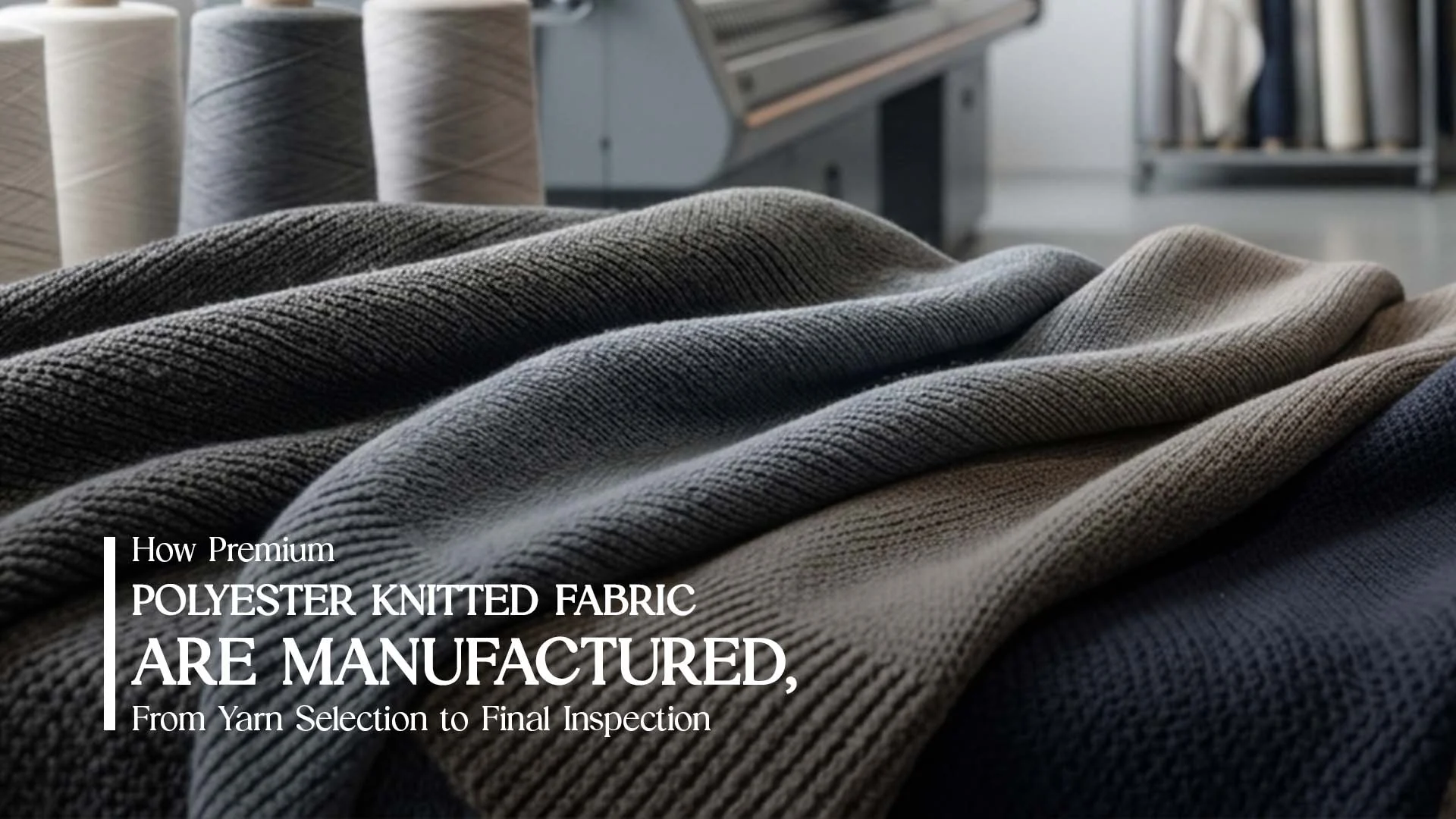
How Premium Polyester Knitted Fabrics Are Manufactured, From Yarn Selection to Final Inspection
- Kaapd Fabrics
- May 18, 2026
- Polyester Knitted Fabrics, Fabric
- 0 Comments
Introduction
Understanding how fabrics are produced is important for brands and wholesalers who want consistent quality in their garments. When businesses know the basics of polyester knitted fabric manufacturing, it becomes easier to evaluate suppliers, discuss fabric specifications, and ensure the material used in production meets their quality expectations. This knowledge also helps buyers avoid issues such as inconsistent fabric quality, color variation, or durability problems in finished garments.
Fabric quality is not determined by a single step. Instead, it is the result of several carefully managed stages in the manufacturing process. From selecting the right polyester yarn to knitting the fabric, followed by dyeing, finishing, and the final fabric inspection process, every stage contributes to the overall performance, texture, and appearance of the fabric. Proper quality control in knitted fabrics at each stage ensures that the material meets industry standards and remains suitable for large-scale garment production.
In this guide, we will explain the complete polyester fabric production journey in simple terms. Starting from raw yarn selection and knitting to processing, finishing, and final inspection, the article will help brands and wholesalers understand how polyester knitted fabric manufacturing works and how premium fabrics are produced before reaching the market.
What is Polyester Knitted Fabric Manufacturing?
Polyester knitted fabric manufacturing is the process of creating fabric by interlooping polyester yarns using specialized knitting machines. Instead of weaving yarns over and under each other, knitting forms a series of connected loops that create a flexible and stretchable fabric structure. This loop-based construction gives knitted fabrics their softness, elasticity, and comfort, which makes them ideal for many types of garments.
This manufacturing method is different from woven fabric production. In woven fabrics, yarns are tightly interlaced at right angles, which usually results in a more rigid structure. Knitted fabrics, on the other hand, have natural stretch and better movement because of their looped structure. Because of this flexibility, polyester knitted fabrics are widely used in clothing that requires comfort and mobility.
During polyester knitted fabric manufacturing, polyester yarn is first selected based on the required fabric characteristics such as strength, softness, and thickness. The yarn is then processed through knitting machines that convert it into fabric structures like jersey, rib, or interlock. After knitting, the fabric goes through further stages in polyester fabric production, including dyeing, finishing, and quality inspection to achieve the desired appearance and performance.
Today, polyester knitted fabrics are used in a wide range of modern apparel such as sportswear, fashion garments, casual wear, and activewear. Their durability and easy maintenance make them a practical choice for brands and wholesalers looking for reliable fabric solutions.
Why Polyester Knitted Fabrics Are Popular in the Fashion Industry
Polyester knitted fabrics have become very popular in the fashion industry because they combine performance, comfort, and durability. Fashion brands prefer these fabrics as they support modern garment designs while maintaining long-term quality.
One of the main reasons for their popularity is durability. Polyester fibers are strong and resistant to wear and tear, which helps garments maintain their shape and structure even after repeated washing and use. This makes polyester knitted fabrics suitable for both everyday clothing and performance wear.
Another advantage is stretchability. The knitted structure naturally provides flexibility, allowing garments to move comfortably with the body. This feature is especially valuable in clothing such as activewear, sportswear, and casual garments where comfort and movement are important.
Moisture resistance is also a key benefit. Polyester fabrics do not absorb moisture easily and can dry quickly, making them ideal for athletic clothing and warm-weather garments. In addition, these fabrics are lightweight and easy to maintain, which adds convenience for consumers.
Because of their versatility, polyester knitted fabrics are used across many fashion categories. They can be designed in different textures, weights, and finishes, allowing brands to create a wide variety of garments while maintaining consistent quality through controlled polyester knitted fabric manufacturing processes.
Step 1: Yarn Selection in Polyester Fabric Production
The first and most important stage in polyester fabric production is selecting the right yarn. The quality of the yarn directly affects how the fabric will look, feel, and perform. In polyester knitted fabric manufacturing, even advanced machines cannot produce premium fabric if the yarn quality is poor. That is why experienced manufacturers focus heavily on sourcing high-quality polyester yarn before starting the knitting process.
Polyester yarn acts as the basic building material of the fabric. If the yarn is smooth, strong, and uniform, the knitting process becomes more stable and the fabric structure remains consistent. On the other hand, low-quality yarn can cause problems such as uneven fabric surfaces, weak fabric strength, or defects during knitting. Because of this, yarn selection plays a major role in determining the durability, softness, and overall performance of the finished knitted fabric.
For brands and wholesalers, understanding this stage of polyester knitted fabric manufacturing is useful when evaluating fabric suppliers. Manufacturers who carefully select yarn and maintain strict sourcing standards are more likely to produce fabrics with reliable quality and long-lasting performance.
Key Factors Considered in Yarn Selection
Manufacturers consider several important factors when choosing yarn for polyester fabric production:
- Yarn thickness and filament type – The thickness of the yarn influences the fabric weight, softness, and structure. Different filament types can also affect the smoothness and appearance of the fabric.
- Yarn strength and durability – Strong yarn ensures that the fabric can withstand knitting tension and regular wear without easily breaking or losing shape.
- Consistency of yarn quality – Uniform yarn helps produce fabric with a consistent texture and structure, which is essential for large-scale garment manufacturing.
- Supplier reliability – Working with trusted yarn suppliers ensures steady quality and consistent supply, which supports stable polyester knitted fabric manufacturing.
Step 2: Knitting Process in Polyester Knitted Fabric Manufacturing
After selecting high-quality yarn, the next stage in polyester knitted fabric manufacturing is the knitting process. Knitting is the method of turning polyester yarn into fabric by forming a series of interlocking loops. Unlike woven fabrics, which are made by crossing yarns over and under each other, knitted fabrics are created by looping yarns continuously. This looped structure gives the fabric natural stretch, softness, and flexibility, making it ideal for comfortable garments.
Modern manufacturing uses two main types of knitting machines:
- Circular knitting machines – These machines produce tubular fabrics and are commonly used for t-shirts, activewear, and other garments requiring stretch. The fabric comes out in a continuous circular form that can be cut and sewn as needed. Circular knitting allows fast production and consistent fabric quality.
- Flat knitting machines – These machines produce flat sheets of fabric, often used for panels, collars, cuffs, and more specialized garment pieces. Flat knitting offers more design flexibility and can create intricate patterns and textures in the fabric.
Both machine types are essential in polyester fabric production, and skilled technicians monitor them closely to ensure smooth operation and consistent loop formation. Proper machine settings, yarn tension, and speed control are critical to avoid defects such as uneven loops, holes, or fabric distortion.
Types of Knitted Fabric Structures
Different knitted fabric structures are used to achieve specific fabric characteristics, depending on the garment type. The most common structures in polyester knitted fabric manufacturing include:
- Single Jersey Fabric – This is the simplest knitted structure, producing a smooth front surface and slightly textured back. It is lightweight, soft, and widely used for t-shirts, tops, and casual wear.
- Rib Knit Fabric – Rib knitting creates vertical ridges in the fabric, giving it excellent elasticity. It is commonly used for cuffs, collars, waistbands, and fitted garments because it stretches and returns to shape easily.
- Interlock Knit Fabric – Interlock knitting produces a thicker, double-layered fabric that is smooth on both sides. It is stable, durable, and often used for dresses, sportswear, and premium apparel requiring a more polished finish.
Understanding these structures helps brands and wholesalers evaluate fabric performance and select the right type for their garment designs while ensuring the polyester knitted fabric manufacturing process meets quality standards.
Step 3: Dyeing and Fabric Processing
Once the fabric is knitted, it moves to the dyeing and processing stage. This step is essential in polyester knitted fabric manufacturing because it determines the fabric’s final color, appearance, and feel. Raw knitted fabric is usually off-white or undyed, so dyeing gives it the desired shade and ensures it meets the brand’s requirements.
Controlled dyeing is crucial for maintaining consistent fabric quality. Improper dyeing can cause uneven color, fading, or damage to the fabric structure. Professional manufacturers use advanced machines and precise chemical formulations to ensure every batch of fabric has uniform color and maintains its original texture and strength.
Fabric processing may also include treatments to improve softness, smoothness, and stability. These treatments prepare the fabric for finishing and final inspection, making sure the material is ready for garment production.
Key Aspects of Fabric Dyeing
- Color consistency across batches – Maintaining the same shade for all fabric lots is critical for garments that need uniformity in large production runs.
- Fabric shrinkage control – During dyeing, fabrics may shrink. Proper control ensures the fabric retains its correct dimensions and fits the intended garment pattern.
- Chemical treatment balance – The right mix of chemicals enhances color fixation, prevents damage, and maintains fabric softness.
- Environmental considerations in modern textile processing – Sustainable practices, such as water recycling and controlled chemical usage, reduce environmental impact while maintaining high-quality polyester fabric production.
Proper dyeing and processing not only enhance the fabric’s appearance but also contribute to its durability, feel, and performance in the final garments.
Step 4: Fabric Finishing in Polyester Fabric Production
After dyeing and processing, the fabric undergoes finishing treatments to enhance its performance, texture, and durability. Finishing is a critical stage in polyester knitted fabric manufacturing because it transforms the fabric from basic knitted material into a premium product suitable for garments. Proper finishing ensures the fabric feels comfortable, looks appealing, and performs well during wear and washing.
Finishing processes can improve softness, prevent defects, control moisture, and stabilize the fabric’s structure. Manufacturers carefully select finishing techniques based on the fabric’s intended use, whether it is sportswear, casual clothing, or fashion garments.
Common Finishing Treatments
- Softening treatments – Make the fabric feel smooth and comfortable against the skin, improving overall wearability.
- Anti-pilling finishing – Reduces the formation of small fabric balls (pills) on the surface, keeping garments looking new for longer.
- Moisture management treatments – Enhance breathability and moisture-wicking properties, ideal for activewear and sports garments.
- Heat setting for fabric stability – Stabilizes the fabric dimensions, prevents shrinkage, and ensures that the fabric retains its shape after washing or heat exposure.
Through these finishing steps, the fabric not only looks and feels premium but also meets the durability and performance standards expected by brands and wholesalers. Well-finished fabrics are easier to cut, sew, and use in high-quality garment production.
Step 5: Quality Control in Knitted Fabrics
Quality control is a vital part of polyester knitted fabric manufacturing. Even with high-quality yarn, precise knitting, careful dyeing, and finishing, a fabric can still have defects if it is not properly monitored. Quality control ensures that every batch of fabric meets the expected standards for strength, appearance, and performance before it reaches brands and wholesalers.
Manufacturers implement systematic checks at different stages of production. Skilled technicians inspect fabrics during knitting, after dyeing, and post-finishing to catch any issues early. This prevents defects from reaching the final product, reduces waste, and ensures consistency across all fabric batches. Proper quality control also builds trust with buyers, as it guarantees that the fabric will perform well in garments and maintain its look and feel over time.
Key Quality Control Checks
- Fabric strength and durability testing – Ensures the fabric can withstand stretching, wear, and repeated use without tearing or losing shape.
- GSM and thickness verification – Confirms the fabric weight and thickness meet the specified requirements for the intended garment.
- Surface defect identification – Detects issues like holes, uneven knitting, or foreign fibers that could affect the fabric’s appearance and quality.
- Color shade consistency – Verifies that the fabric color matches the desired shade and remains uniform across the entire batch.
By following strict quality control in knitted fabrics, manufacturers ensure that the final fabric is reliable, durable, and suitable for premium garment production.
Step 6: Fabric Inspection Process Before Delivery
The final stage in polyester knitted fabric manufacturing is the fabric inspection process, which ensures that the finished fabric meets all quality standards before being delivered to brands and wholesalers. Even after careful yarn selection, knitting, dyeing, finishing, and ongoing quality control, a final inspection is necessary to catch any defects that may have occurred during production or handling.
During this stage, manufacturers examine the fabric thoroughly, often using specialized machines and proper lighting conditions. The goal is to ensure that only premium-quality fabric reaches the market, maintaining consistency and reliability for brands and wholesalers who rely on it for their garment production.
Common Fabric Defects Checked During Inspection
- Holes or knitting defects – Detects broken loops, tears, or structural issues that could compromise fabric strength.
- Color variation – Ensures uniformity in shade across the entire fabric roll or batch.
- Fabric stains or marks – Identifies any unwanted spots, dirt, or chemical residues that may affect appearance.
- Width and GSM variation – Confirms that the fabric dimensions and weight per square meter match the specifications provided by the manufacturer.
A thorough fabric inspection process helps maintain the reputation of both the manufacturer and the brands that purchase the fabric, ensuring that only high-quality polyester knitted fabrics are used in garment production.
Why Understanding Polyester Knitted Fabric Manufacturing Matters for Brands
For brands and wholesalers, having a clear understanding of polyester knitted fabric manufacturing is more than technical knowledge—it’s a business advantage. Knowing how fabrics are produced helps buyers make informed sourcing decisions and select manufacturers who can consistently deliver high-quality materials.
When brands understand each stage—from yarn selection and knitting to dyeing, finishing, and final inspection—they can communicate more effectively with suppliers. This ensures that the fabric specifications, such as GSM, color, texture, and stretch, are clearly understood and consistently met. Miscommunication or lack of understanding at this stage can lead to fabric that does not match garment requirements, resulting in delays, extra costs, or compromised product quality.
Moreover, knowledge of polyester fabric production allows brands to evaluate a manufacturer’s processes and quality standards. By asking the right questions about quality control in knitted fabrics and the fabric inspection process, brands can verify that the manufacturer maintains proper checks at every stage. This reduces the risk of defects, ensures fabric reliability, and ultimately results in garments that meet consumer expectations.
In short, understanding polyester knitted fabric manufacturing empowers brands and wholesalers to source premium fabrics, maintain consistent product quality, and build strong, long-term relationships with trusted suppliers. Contact us.
Conclusion
Premium polyester knitted fabrics are the result of a carefully managed production process. From yarn selection to knitting, followed by dyeing, finishing, and the final fabric inspection process, every stage plays a crucial role in determining the fabric’s strength, appearance, and performance.
Strong quality control in knitted fabrics throughout production ensures that defects are caught early, colors remain consistent, and the fabric meets the specifications required by brands and wholesalers. By following these controlled stages, manufacturers can deliver fabrics that are durable, comfortable, and visually appealing, helping brands create high-quality garments that satisfy consumers.
Understanding the complete polyester fabric production process allows brands and wholesalers to make informed sourcing decisions, communicate effectively with manufacturers, and maintain consistent product quality, ensuring their garments are built from reliable, premium fabrics. Visit us.
Polyester Knitted Fabric Manufacturing FAQ
Polyester knitted fabric manufacturing is the process of converting polyester yarn into knitted fabric using circular or flat knitting machines. This process creates fabrics that are stretchy, durable, and ideal for apparel like sportswear, dresses, and casual wear. During production, manufacturers focus on yarn selection, knitting quality, dyeing, finishing, and proper quality control in knitted fabrics to ensure premium results.
Manufacturers maintain quality through strict checks at every stage of polyester fabric production. This includes inspecting yarn for consistency, monitoring knitting machine performance, checking color and dyeing accuracy, and applying finishing treatments. Final fabric inspection processes identify defects such as uneven loops, color variation, or improper GSM, ensuring only high-quality fabrics reach brands and wholesalers.
The fabric inspection process is crucial because it guarantees that the final knitted fabric meets quality standards. Inspectors look for defects, check color consistency, measure GSM, and verify width. This step protects brands from receiving faulty fabric and ensures garments made from the fabric are durable, visually appealing, and reliable for end customers.
Yarn selection is the foundation of premium polyester knitted fabric manufacturing. High-quality yarns provide strength, smooth texture, and uniform loops, which affect the fabric’s durability and feel. Brands and wholesalers can work with manufacturers to choose the right yarn type and thickness based on fabric use, ensuring the final fabric meets specific quality and performance requirements.
Brands and wholesalers can assess a manufacturer’s quality control in knitted fabrics by asking about their production checks, inspection reports, and defect rates. Key indicators include consistent fabric GSM, thorough fabric inspection processes, and adherence to finishing standards. Working with manufacturers who maintain strict quality protocols ensures premium, reliable fabrics for garment production.
Related Posts

- Kaapd Fabrics
- June 29, 2026
Top 5 Reasons Why You Should Choose Polyester Fabric Manufacturers for Your Business
Building an apparel brand today is not easy. ..

- Kaapd Fabrics
- June 19, 2026
Polyester Spandex vs Polyester Lycra: What’s the Difference?
Building an apparel brand today is not easy. ..

- Kaapd Fabrics
- July 20, 2026
How to Choose the Right Knitted Fabric Supplier for Your Garment Brand
Building an apparel brand today is not easy. ..


