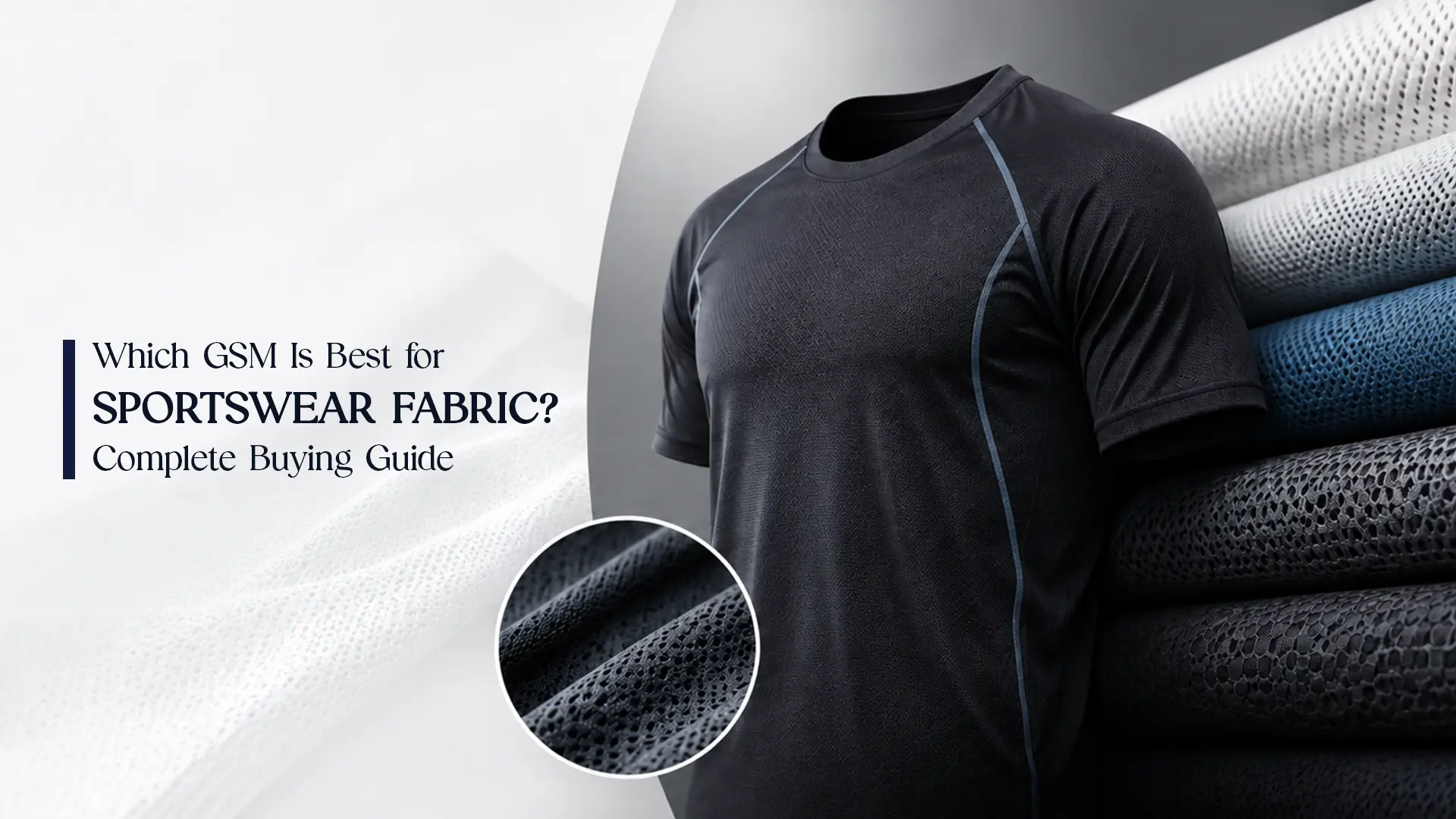
Which GSM Is Best for Sportswear Fabric? Complete Buying Guide
- Kaapd Fabrics
- August 22, 2026
- Polyester Knitted Fabrics, Fabric
- 0 Comments
Choosing the right fabric is one of the most important decisions in sportswear manufacturing. The fabric directly affects comfort, movement, breathability, durability, and the overall performance of the garment. While many buyers focus on fabric type, stretch, and finishing, GSM is another important factor that determines how the fabric feels and performs.
Many manufacturers, brands, and apparel buyers often ask: which gsm is best for sportswear fabric when selecting material for activewear, gym clothing, running wear, and performance apparel. The answer depends on several factors, including fabric composition, usage purpose, weather conditions, and customer expectations.
Understanding GSM helps businesses make better sourcing decisions and avoid choosing fabrics that are too heavy, too thin, or unsuitable for their target market.
What Is GSM in Sportswear Fabric?
GSM stands for Grams per Square Meter. It represents the weight of fabric in one square meter area. In simple terms, GSM helps identify whether a fabric is lightweight, medium weight, or heavy.
In the sportswear industry, GSM is commonly used as a reference point when selecting fabrics because it influences the feel, thickness, coverage, and comfort level of garments.
A lower GSM fabric generally feels lighter and allows better airflow, making it suitable for activities where breathability and quick drying are important. A higher GSM fabric usually provides more coverage, structure, and durability, which can be useful for garments requiring extra support or protection.
However, GSM alone does not define fabric quality. Two fabrics with the same GSM can perform differently because of differences in fiber quality, knitting structure, finishing technology, and fabric construction.
Why GSM Matters in Sportswear Manufacturing
Understanding which gsm is best for sportswear fabric helps manufacturers create products that match customer expectations. Sportswear is designed for movement, and every detail of the fabric contributes to the final wearing experience.
A fabric with the correct weight can provide a balance between comfort and performance. For example, athletes and fitness users usually prefer fabrics that feel lightweight, allow body movement, and help control moisture during physical activities.
On the other hand, choosing a fabric that is too heavy may reduce comfort during workouts, especially in warm climates. A fabric that is too lightweight may not provide enough coverage or durability for certain applications.
Experienced manufacturers usually evaluate GSM together with other performance factors before finalizing a fabric for production.
How GSM Affects Sportswear Performance
Comfort and Breathability
Sportswear is worn during activities that generate body heat and sweat. The fabric should allow air circulation and help manage moisture effectively.
Lightweight fabrics usually provide better ventilation, which is why they are commonly used for running shirts, training tops, and summer activewear.
Medium-weight fabrics offer a balance between comfort and durability, making them suitable for regular gym wear and everyday sports clothing.
Movement and Flexibility
Sportswear requires freedom of movement. The fabric weight, combined with stretch properties, determines how easily a garment moves with the body.
Fabrics with suitable GSM and elastane blends can provide better flexibility while maintaining shape after repeated use.
Durability and Product Life
A fabric’s weight can influence its strength and resistance to wear. Higher GSM fabrics may provide better durability for garments that experience frequent stretching, washing, and usage.
However, durability also depends on yarn quality, fabric construction, and finishing treatments.
What GSM Is Best for Different Types of Sportswear?
The answer to which gsm is best for sportswear fabric depends on the type of garment and its intended purpose. There is no single GSM value that works for every sportswear product.
Common GSM ranges used in sportswear include:
- Running T-shirts: Around 120-160 GSM
- Gym and training wear: Around 140-180 GSM
- Compression wear and leggings: Around 180-250 GSM
- Sports jackets and outerwear: 200 GSM and above
These ranges are general guidelines. Manufacturers often adjust GSM based on climate, customer requirements, fabric composition, and brand positioning.
Best GSM Range for Different Activewear Applications
Sports T-Shirts and Running Wear
Sports T-shirts usually require lightweight fabrics because users need maximum comfort and airflow during physical activity.
When deciding which gsm is best for sportswear fabric for running apparel, manufacturers generally prefer lightweight materials between 120 and 160 GSM.
Polyester-based fabrics are commonly used because they are lightweight, quick drying, and capable of handling moisture effectively.
Popular options include:
- Polyester jersey fabric
- Polyester mesh fabric
- Polyester-spandex blends
These fabrics help athletes stay comfortable during intense workouts and outdoor activities.
Gym Wear and Training Apparel
Gym wear requires a balance between flexibility, durability, and comfort. Extremely lightweight fabrics may not always provide enough structure for regular training activities.
Medium-weight fabrics between 140 and 180 GSM are commonly selected for gym clothing because they provide better coverage while maintaining flexibility.
For fitness brands, fabric selection often depends on whether the product is designed for strength training, yoga, casual workouts, or high-intensity exercises.
Compression Wear and Leggings
Compression garments need stronger fabric construction because they require support, stretch recovery, and better body coverage.
Higher GSM fabrics are usually preferred for leggings and compression wear because they reduce transparency and provide a more supportive feel.
Fabrics containing polyester and elastane are widely used because they combine durability with stretch performance.
How Polyester Fabric GSM Influences Sportswear Quality
Polyester is one of the most popular fibers used in activewear because of its durability, lightweight nature, and moisture management properties.
A common question related to polyester fabric selection is which gsm is best for sportswear fabric when producing performance clothing. The answer depends on the final product requirements.
Lightweight polyester fabrics are often selected for running shirts and summer sportswear because they dry quickly and provide better ventilation.
Medium GSM polyester fabrics are suitable for training apparel because they offer a stronger balance between comfort and durability.
Higher GSM polyester fabrics are used for jackets, winter sportswear, and products where more structure and coverage are required.
The fabric construction also plays an important role. A polyester mesh fabric and polyester interlock fabric with the same GSM can provide completely different wearing experiences.
Important Factors Beyond GSM When Selecting Sportswear Fabric
While finding which gsm is best for sportswear fabric is important, manufacturers should not make decisions based only on fabric weight.
Fabric Composition
The fiber blend affects performance significantly. Polyester, nylon, and elastane are commonly used in activewear because they provide durability, stretch, and moisture control.
For example, polyester-spandex blends are popular for garments requiring flexibility, while pure polyester fabrics are often selected for lightweight performance clothing.
Fabric Construction
The knitting structure affects airflow, softness, and stretch. Mesh fabrics provide better ventilation, while interlock fabrics offer more coverage and stability.
A proper fabric gsm guide should always consider GSM along with construction type.
Climate and Usage Conditions
Sportswear designed for hot regions usually requires lighter fabrics with better breathability. Products designed for colder environments may require heavier fabrics or layered materials.
Finishing Technology
Modern sportswear often includes special finishes such as moisture-wicking, anti-odor, quick-dry, and UV protection treatments.
These technologies can improve performance even when using lightweight fabrics.
Common Mistakes When Choosing Sportswear Fabric GSM
Many buyers make the mistake of selecting fabric only by thickness. A thicker fabric does not always mean better quality or better performance.
Another common mistake is ignoring the end-use requirement. A running T-shirt, gym vest, and sports jacket have different fabric requirements.
Manufacturers should always test fabric samples before bulk production. Testing helps evaluate comfort, stretch, color durability, shrinkage, and overall performance.
A professional sourcing process considers GSM, fiber content, construction, and finishing together.
A Simple Fabric GSM Guide for Sportswear Buyers
A practical approach to which gsm is best for sportswear fabric starts with understanding the product purpose.
First, identify the garment category and customer expectations. A premium running brand may require lightweight performance fabric, while a winter sportswear brand may need heavier materials.
Next, evaluate fabric composition and construction. GSM should support the required performance characteristics rather than being the only selection criteria.
Finally, conduct sample testing before production. Real-world testing provides better insights than choosing fabric only through specifications.
How to Test Sportswear Fabric Before Bulk Buying
Professional manufacturers usually evaluate fabric samples through multiple quality checks.
Important testing areas include:
- GSM measurement
- Stretch and recovery testing
- Wash durability testing
- Color fastness testing
- Moisture management evaluation
These tests help ensure that the selected fabric performs well after repeated usage and washing.
Final Thoughts on Choosing the Right Sportswear Fabric Weight
Selecting the correct fabric weight is essential for creating comfortable and high-performing sportswear products. GSM provides an important measurement for understanding fabric characteristics, but it should always be considered along with composition, construction, stretch, and finishing.
Ultimately, which gsm is best for sportswear fabric depends on the product category, target audience, and performance expectations. A carefully selected fabric helps brands deliver better comfort, durability, and customer satisfaction.
For manufacturers and apparel brands, the best approach is to evaluate GSM as part of a complete fabric selection process rather than treating it as the only deciding factor.
Frequently Asked Questions (FAQs)
The ideal GSM depends on the type of sportswear product. Lightweight activewear commonly uses fabrics around 120-160 GSM, while gym wear and training apparel often use 140-180 GSM. Heavier garments like compression wear or jackets may require higher GSM fabrics.
Many sports T-shirts use polyester fabrics between 120 and 160 GSM because they provide lightweight comfort, quick drying, and good airflow.
Yes, GSM affects fabric weight, thickness, and feel. However, quality also depends on fiber type, fabric construction, finishing, and performance features.
Related Posts

- Kaapd Fabrics
- August 29, 2026
Polyester vs Spandex Fabric: Which is Better for Activewear Manufacturing?
Building an apparel brand today is not easy. ..

- Kaapd Fabrics
- October 14, 2026
2 Way vs 4 Way Stretch Fabric: What Activewear Needs
Building an apparel brand today is not easy. ..

- Kaapd Fabrics
- October 8, 2026
Sublimation Printing Fabric for Sportswear: Buyer’s Guide
Building an apparel brand today is not easy. ..


