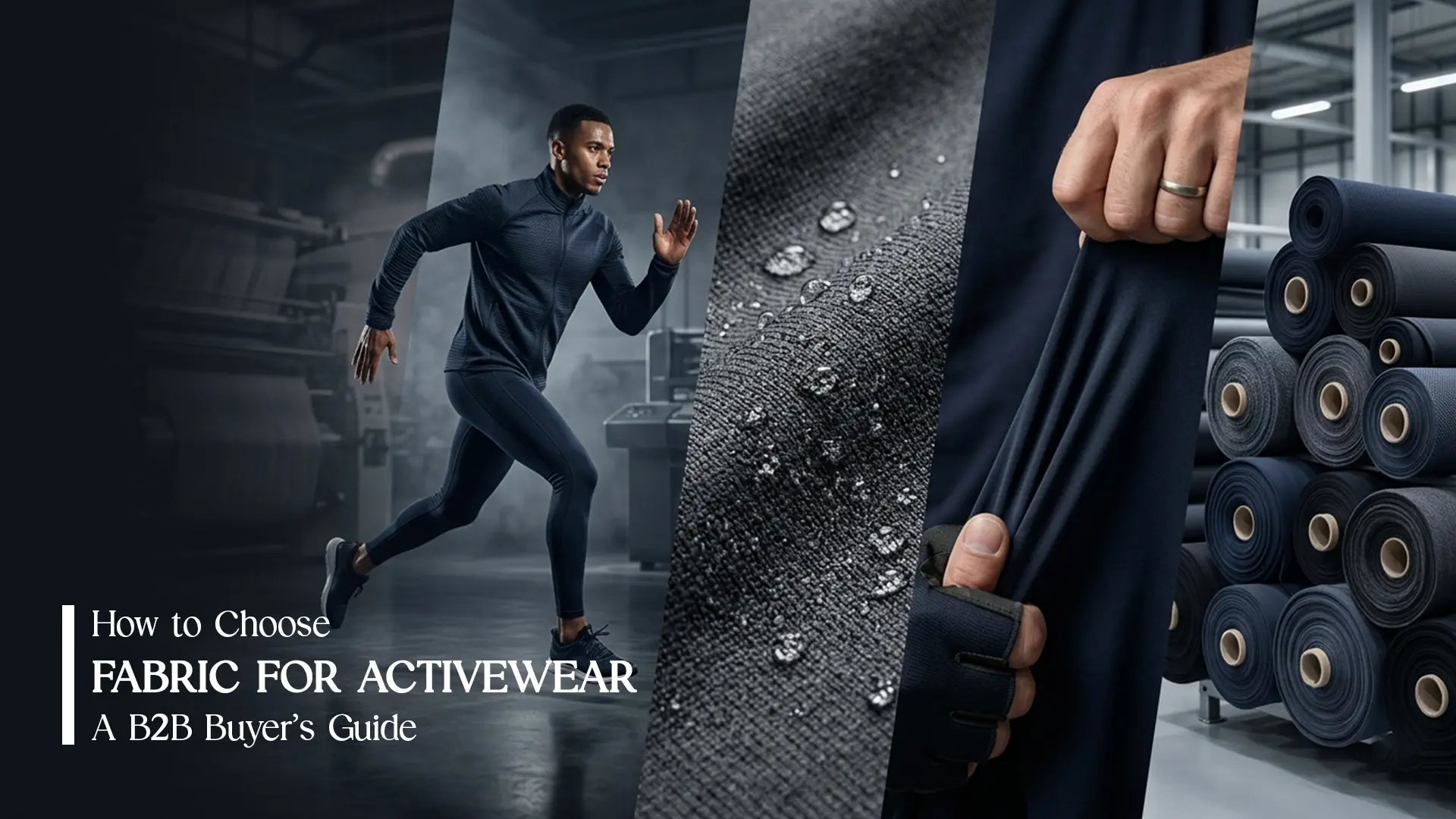
How to Choose Fabric for Activewear: A B2B Buyer’s Guide
- Kaapd Fabrics
- June 15, 2026
- Polyester Knitted Fabrics, Fabric
- 0 Comments
1. Introduction: Why Fabric Selection Directly Impacts Profitability in Activewear
In the activewear and sportswear manufacturing industry, fabric selection is not a design decision it is a commercial risk decision.
Most B2B buyers underestimate how critical how to choose fabric for activewear actually is in determining product success in the market. A wrong fabric choice does not just affect comfort; it directly impacts:
- Product return rates
- Brand reputation in performance wear segments
- Export qualification approvals
- Bulk order rejections from international buyers
- Long-term customer retention in athleisure categories
For example, a fabric with poor moisture control in gym wear can lead to overheating complaints, while a low-stretch material in leggings can cause seam failure during movement. These issues scale rapidly in mass production and become expensive liabilities.
That is why understanding how to choose fabric for activewear is a core competency for textile manufacturers, exporters, and apparel brands operating in performance-driven markets.
2. Why Fabric Selection is the Foundation of Activewear Manufacturing
Activewear is engineered apparel. Unlike casual clothing, it must perform under stress conditions such as:
- High sweat generation
- Constant body movement
- Repeated stretching cycles
- Machine washing durability
- Outdoor exposure (UV, humidity, heat)
A strong fabric choice ensures:
1. Functional Performance
Fabric defines whether the garment can support movement and temperature regulation. For example, moisture-wicking fabric is essential in gym wear because it controls sweat evaporation.
2. Mechanical Stability
Stretch recovery, tear resistance, and seam stability depend on fiber composition like polyester spandex blend or nylon elastane fabric.
3. User Experience & Brand Value
4. Manufacturing Efficiency
Wrong fabric leads to:
- Cutting wastage
- Stitching issues
- High rejection rates in QC
- Increased cost per unit
Therefore, mastering how to choose fabric for activewear is essential for scaling production profitably.
3. Key Technical Factors in Choosing Activewear Fabric
3.1 Stretchability (Elastic Recovery)
Activewear requires dynamic movement. Stretchability is determined by elastane content and knit structure.
- 2-way stretch: basic sports tees, casual wear
- Four-way stretch fabric: leggings, yoga wear, compression wear
Four-way stretch ensures fabric expands both horizontally and vertically without deformation.
3.2 Moisture Management System
One of the most critical performance factors.
A good moisture-wicking fabric:
- Pulls sweat away from skin
- Spreads moisture across surface
- Enhances evaporation speed
Polyester-based fabrics perform best due to low moisture retention.
3.3 Breathability (Air Permeability)
Breathability determines thermal comfort.
Low breathability leads to:
- Heat accumulation
- Skin irritation
- Reduced athletic performance
Performance knits are engineered to balance airflow and structure.
3.4 Durability & Abrasion Resistance
Activewear undergoes friction during running, gym training, and stretching.
Key durability indicators:
- Pilling resistance
- Tear strength
- Seam stability
- Wash cycle endurance
Nylon elastane fabric is often preferred for high-durability applications.
3.5 Fabric Weight (GSM Optimization)
GSM (grams per square meter) defines fabric thickness.
- 120–160 GSM → lightweight running wear
- 160–220 GSM → gym wear fabric selection standard range
- 220–300 GSM → compression wear or winter activewear
Wrong GSM selection is one of the most common production failures.
3.6 Cost vs Performance Balance
B2B buyers must optimize between:
- Raw material cost
- Fabric performance grade
- Production scalability
- Target market pricing
Low-cost fabric often leads to higher long-term losses due to returns and brand damage.
4. Types of Fabrics Used in Activewear Manufacturing
Understanding fabric categories is essential in mastering how to choose fabric for activewear.
4.1 Polyester
Most widely used fabric in sportswear.
Advantages:
- Excellent moisture control
- Fast drying
- Cost-effective for bulk production
- High durability
Limitations:
- Can feel synthetic if not blended properly
4.2 Nylon
Premium performance fabric.
Advantages:
- Soft hand feel
- High abrasion resistance
- Better elasticity than polyester
Common use:
- Yoga wear
- Premium leggings
- Compression garments
4.3 Spandex / Elastane
Elastic fiber used in blends.
Function:
- Provides stretch and recovery
- Maintains shape retention
Used in:
- All performance fabrics (never standalone)
4.4 Cotton Blends
Used in lifestyle activewear.
Advantages:
- Comfortable and breathable
- Natural feel
Limitations:
- Poor sweat management
- Retains moisture
4.5 Performance Knit Fabrics
Engineered structures designed for functionality.
Features:
- Airflow zones
- Stretch mapping
- Lightweight construction
These are widely used in premium athleisure brands.
5. Modern Fabric Blends in Activewear Industry
5.1 Polyester + Spandex Blend
Most common combination.
Benefits:
- High elasticity
- Strong moisture-wicking capability
- Cost-effective for mass production
Use cases:
- Gym leggings
- Training t-shirts
- Running shorts
5.2 Nylon + Elastane Fabric
Premium-grade blend.
Benefits:
- Soft touch feel
- High durability
- Better compression fit
Use cases:
- Yoga wear
- High-end activewear brands
5.3 Tri-Blend Fabrics
Typically:
- Polyester
- Cotton
- Rayon or elastane
Benefits:
- Balanced comfort + performance
- Lifestyle athleisure appeal
6. Common Mistakes in Fabric Selection
1. Prioritizing Cost Over Performance
Low-cost fabrics increase:
- Return rates
- QC failures
- Brand damage
2. Ignoring Activity-Based Design
Each activity requires different fabric behavior:
Yoga ≠ Running ≠ Gym training
3. Incorrect GSM Selection
Wrong GSM leads to:
- Transparency issues
- Poor drape
- Heat discomfort
4. Supplier Inconsistency
Without standardized suppliers:
- Color variation occurs
- Shrinkage issues arise
- Bulk rejection risk increases
7. Step-by-Step Decision Framework for Buyers
A structured approach to how to choose fabric for activewear:
Step 1: Define End-Use Application
- Gym training → stretch + durability
- Running → lightweight + breathability
- Yoga → softness + flexibility
Step 2: Select Fiber Composition
- Polyester → performance + cost efficiency
- Nylon → premium durability
- Blends → balanced performance
Step 3: Choose Fabric Construction
- Knit fabrics → stretchability
- Woven fabrics → structure
Step 4: Add Functional Finishes
- Anti-odor treatment
- Moisture-wicking coating
- UV protection
Step 5: Validate Supplier Capability
Check:
- Lab reports
- Bulk consistency
- Export compliance
- MOQ flexibility
8. Market Trends in Activewear Fabrics
8.1 Sustainable Fabrics
- Organic cotton blends
- Eco-friendly dyeing processes
8.2 Recycled Polyester
- Derived from PET bottles
- High demand in export markets
8.3 Smart Textiles
- Temperature regulation
- Sensor-based monitoring (emerging segment)
8.4 Athleisure Expansion
Consumers prefer:
- Daily wear + performance hybrid clothing
- Soft, flexible fabrics
Key Manufacturing Factors:
1. Quality Consistency
Ensures uniform:
- GSM
- Elastic recovery
- Dye performance
2. Bulk Production Capability
Required for:
- Export orders
- Retail scaling
- Brand growth
3. Compliance Standards
Includes:
- International testing norms
- Fabric safety certifications
- Color fastness standards
A strong manufacturing partner ensures how to choose fabric for activewear translates into real-world product success.
9. Importance of Manufacturing Partner Selection
10. Final CTA: Build High-Performance Activewear with the Right Fabric Strategy
If you are a textile manufacturer, fabric supplier, or activewear brand, your growth depends on correct fabric decisions. Visit us.
We help B2B companies with:
- Activewear fabric sourcing strategy
- Performance textile development
- OEM/ODM manufacturing support
- Export-ready production setup
Optimize your activewear line with performance-driven fabric selection and reduce production risk at scale.
How to Choose Fabric for Activewear
Polyester-spandex blend is the most widely used due to durability, stretch, and moisture control.
Related Posts

- Kaapd Fabrics
- May 18, 2026
The Complete Guide to Choosing the Right Online Wholesale Fabric Supplier in India for Your Business
Starting a textile or clothing business is exciting, but one of the most important decisions yo ..

- Kaapd Fabrics
- August 29, 2026
Polyester vs Spandex Fabric: Which is Better for Activewear Manufacturing?
Building an apparel brand today is not easy. ..

- Kaapd Fabrics
- June 25, 2026
Top 5 Fabric Types for Sportswear Manufacturing in India
Building an apparel brand today is not easy. ..


