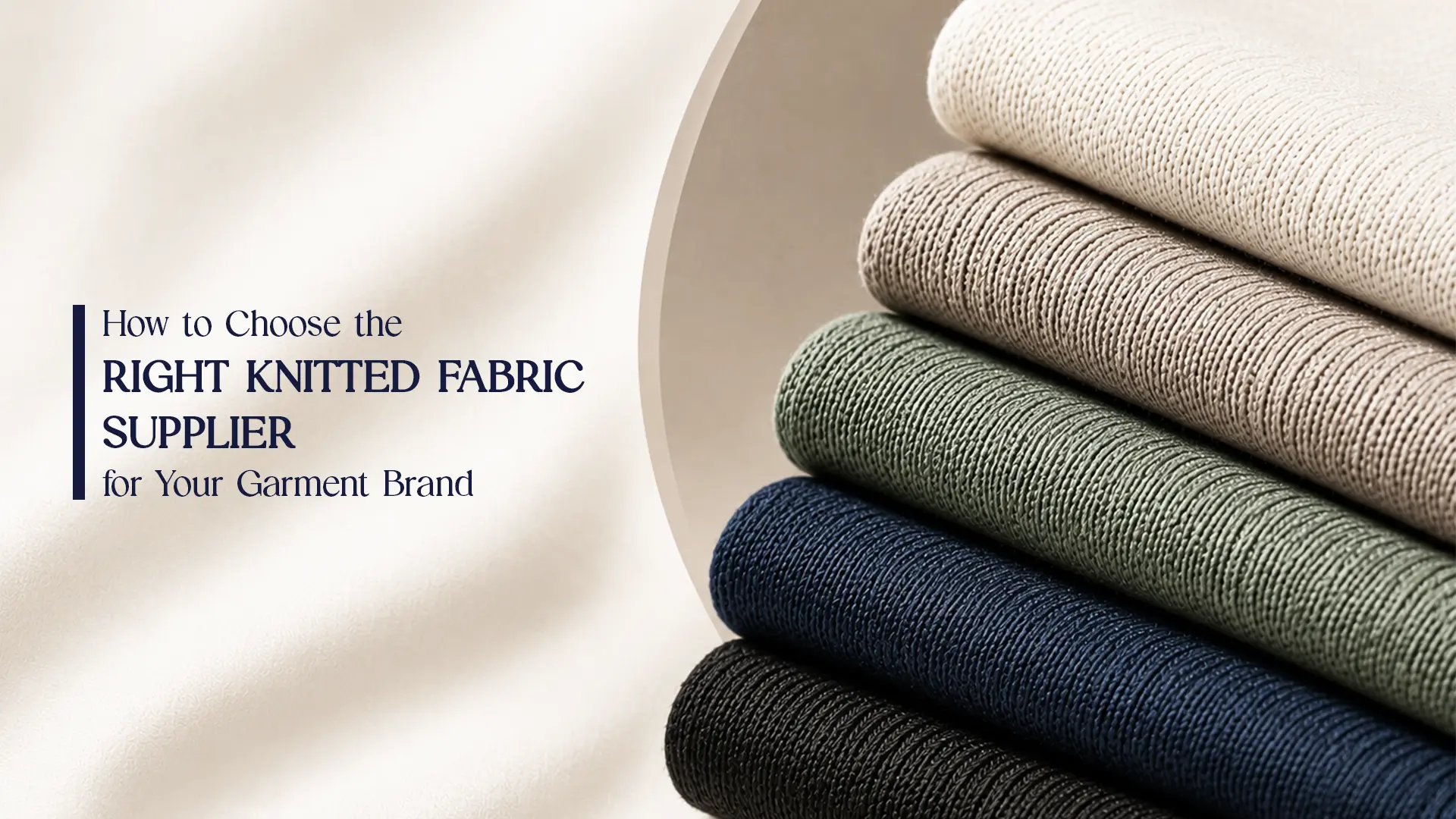
How to Choose the Right Knitted Fabric Supplier for Your Garment Brand
- Kaapd Fabrics
- July 20, 2026
- Polyester Knitted Fabrics, Fabric
- 0 Comments
Introduction: Why Fabric Selection Decides Your Brand Quality
In garment manufacturing, fabric is not just a raw material it is the foundation of product quality, comfort, durability, and customer satisfaction. Even a well-designed garment can fail in the market if the fabric behaves inconsistently during production or after washing. This is why sourcing decisions play a major role in the long-term success of any apparel brand.
Many garment businesses struggle with issues like uneven GSM, shrinkage after wash, poor color fastness, and delivery delays. These problems often do not start in the factory they begin with the wrong supplier selection. Choosing a reliable fabric partner ensures smoother production flow, fewer rejections, and better control over final product quality.
For brands scaling in India’s highly competitive apparel market, working with the best knitted fabric supplier for garment manufacturers in India is not just a sourcing decision but a strategic business move that directly impacts brand reputation and profitability.
Understanding Knitted Fabrics and Their Importance in Apparel Production
Knitted fabrics are widely used in modern garment production due to their flexibility, comfort, and stretchability. Unlike woven fabrics, knitted structures are created by interlooping yarns, which makes them ideal for products like T-shirts, activewear, loungewear, kidswear, and sports apparel.
Common types include single jersey, rib knit, interlock, and fleece. Each type serves a specific purpose depending on the garment category and end-use. For example, single jersey is commonly used in casual T-shirts, while rib fabrics are preferred for cuffs and collars due to their elasticity.
From a manufacturing perspective, consistency in knitted fabric is critical. Small variations in GSM or shrinkage can lead to major production inefficiencies. This is why brands often prioritize working with the best knitted fabric supplier for garment manufacturers in India to ensure stable quality across bulk orders.
Why Supplier Selection Directly Impacts Business Performance
In garment manufacturing, supplier reliability affects almost every stage of production from sampling to final dispatch. A poor-quality fabric batch can result in production delays, higher rejection rates, and increased costs due to rework or wastage.
When fabric quality varies between lots, it becomes difficult for manufacturers to maintain standard sizing and fitting. This eventually affects customer satisfaction and increases return rates, especially in online apparel businesses.
A strong supply chain partnership helps reduce these risks by ensuring consistent material flow and predictable quality output. Many established brands rely on the best knitted fabric supplier for garment manufacturers in India because it helps them maintain production stability and scale without constant quality concerns.
Key Factors to Evaluate Before Selecting a Supplier
Choosing the right fabric supplier requires careful evaluation of several operational and technical aspects. It is not just about pricing but about long-term consistency and production reliability.
Fabric Quality Consistency
One of the most important factors is consistency in GSM, shrinkage control, and color fastness. A reliable supplier maintains strict quality checks to ensure every batch matches the approved sample. Without this consistency, garment production becomes unpredictable.
Production Capability and Fabric Range
A strong supplier should offer a wide range of knitted fabrics including cotton, polyester blends, lycra, and fleece. Production capacity also matters, especially for growing brands that require bulk orders within tight timelines.
Testing and Quality Standards
Reputed suppliers follow proper testing procedures using lab reports for parameters like tensile strength, shrinkage, and color durability. Certifications such as ISO or OEKO-TEX further indicate process reliability and safety compliance.
Delivery and Supply Chain Efficiency
Timely delivery is essential in fashion manufacturing cycles. Delays in fabric supply can disrupt entire production schedules. A dependable supplier ensures smooth logistics and maintains buffer stock for urgent requirements.
Communication and Transparency
Clear communication regarding pricing, lead times, and availability helps avoid misunderstandings. Suppliers who provide transparent updates are generally more reliable in long-term partnerships.
These factors collectively help brands identify the best knitted fabric supplier for garment manufacturers in India based on operational performance rather than assumptions.
Common Mistakes Brands Make While Choosing Fabric Suppliers
Many garment businesses, especially in their early stages, make the mistake of selecting suppliers purely based on low pricing. While cost is important, it should never compromise fabric quality or consistency.
Another common mistake is skipping sample testing. Without physically evaluating fabric behavior such as shrinkage, stretch recovery, and color fastness brands risk large-scale production issues.
Some businesses also fail to assess bulk production capability. A supplier may handle small orders well but struggle with large-scale manufacturing requirements.
Over time, these mistakes lead to quality complaints, delayed deliveries, and loss of customer trust.
Step-by-Step Process to Select the Right Supplier
A structured approach helps garment brands reduce risk and make informed sourcing decisions. Instead of rushing into bulk orders, businesses should follow a systematic evaluation process.
First, shortlist suppliers based on specialization in knitted fabrics and their experience in the textile industry. Then, request multiple fabric samples to compare quality, GSM variations, and finish.
Next, conduct internal or lab testing to evaluate shrinkage, durability, and color performance. After this, assess their production capacity and ability to handle scaling requirements.
Once initial checks are complete, place a small trial order to validate real-time performance in bulk production conditions. Only after successful trials should long-term sourcing agreements be considered.
This methodical process is often followed by brands working with the best knitted fabric supplier for garment manufacturers in India to ensure reduced risk and consistent output.
How the Right Supplier Improves Long-Term Business Growth
A strong supplier partnership does more than just ensure material availability it directly contributes to business growth. When fabric quality is consistent, manufacturers can reduce rejection rates and improve production efficiency.
It also allows brands to focus more on design innovation rather than quality troubleshooting. Stable sourcing helps maintain uniform product standards, which strengthens customer trust and repeat purchases.
For export-oriented or scaling brands, reliable sourcing becomes even more important because international buyers expect strict quality compliance and consistency across shipments.
Working with the best knitted fabric supplier for garment manufacturers in India helps businesses build this level of operational stability and long-term scalability.
Red Flags to Watch Before Finalizing a Supplier
Before entering into a long-term agreement, it is important to identify warning signs that indicate potential risks. Lack of proper documentation or missing test reports is one of the first red flags.
Frequent inconsistencies between sample and bulk quality also indicate weak production control. If a supplier is unable to provide clear delivery timelines, it can lead to future production disruptions.
Unclear pricing structures and hidden charges are also signs of unreliable operations. A professional supplier always maintains transparency in both pricing and process.
Expert Insights for Building Strong Supplier Relationships
Long-term success in garment manufacturing depends heavily on trust-based supplier relationships. Instead of treating suppliers as transactional vendors, brands should focus on building collaborative partnerships.
Regular quality audits, advance order forecasting, and structured communication help maintain alignment between both parties. This reduces misunderstandings and improves production efficiency over time.
Industry experience shows that brands working closely with dependable suppliers achieve better consistency, faster scaling, and fewer production disruptions. This is why many successful businesses continue partnering with the best knitted fabric supplier for garment manufacturers in India for long-term growth.
Conclusion: Making Smarter Fabric Sourcing Decisions
Selecting the right fabric partner is one of the most important decisions in the garment manufacturing ecosystem. It directly influences product quality, production stability, and customer satisfaction.
Instead of focusing only on cost, brands should evaluate quality consistency, production capacity, testing standards, and communication transparency. A structured approach ensures lower risk and better long-term performance.
Ultimately, building a reliable supply chain is not about finding a vendor it is about building a partnership that supports growth, scalability, and brand reputation in a competitive market.
Frequently Asked Questions (FAQs)
You should evaluate fabric consistency (GSM, shrinkage, color fastness), production capacity, testing standards, delivery reliability, and communication transparency. Always test samples before placing bulk orders to avoid production issues.
Knitted fabric is preferred because it offers stretch, comfort, and breathability. It is suitable for T-shirts, activewear, loungewear, and kidswear, making it one of the most versatile fabric types in the apparel industry.
Consistency can be ensured by working with suppliers who follow strict quality control processes, provide lab test reports, and maintain standardized production systems. Regular batch testing and sample approvals also help maintain uniform quality.
Poor suppliers often lead to issues like uneven GSM, shrinkage after wash, color fading, delayed deliveries, and high rejection rates in production. These problems increase manufacturing cost and affect brand reputation.
A strong supplier relationship ensures stable fabric supply, better pricing over time, faster communication, and fewer production disruptions. Long-term partnerships help brands scale smoothly and maintain consistent product quality.
Related Posts

- Kaapd Fabrics
- June 29, 2026
Top 5 Reasons Why You Should Choose Polyester Fabric Manufacturers for Your Business
Building an apparel brand today is not easy. ..

- Kaapd Fabrics
- June 19, 2026
Polyester Spandex vs Polyester Lycra: What’s the Difference?
Building an apparel brand today is not easy. ..

- Kaapd Fabrics
- September 11, 2026
Best Fabric for Sportswear: Comparing Polyester, Spandex, Nylon & Other Performance Fabrics
Building an apparel brand today is not easy. ..


