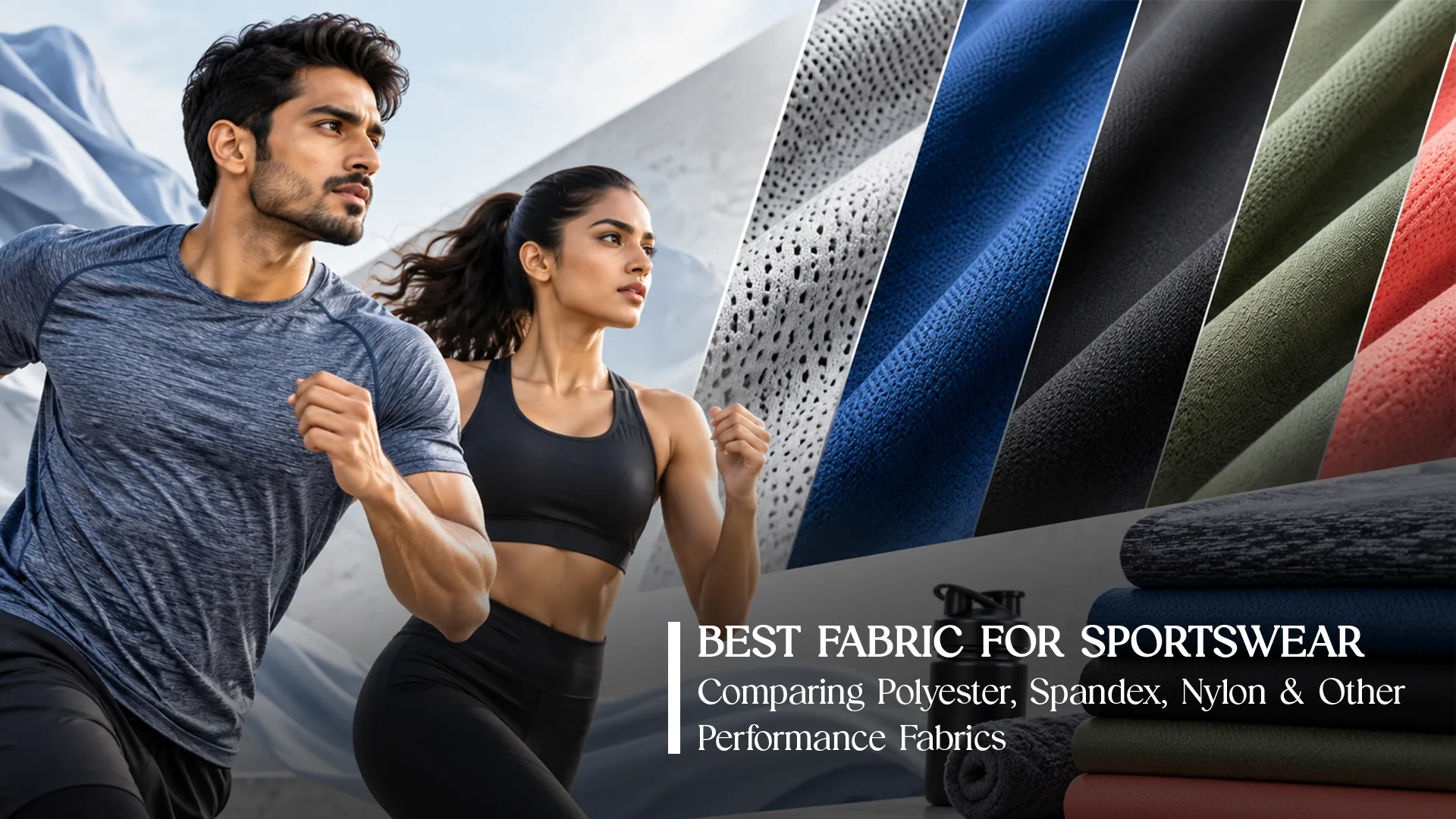
Best Fabric for Sportswear: Comparing Polyester, Spandex, Nylon & Other Performance Fabrics
- Kaapd Fabrics
- September 11, 2026
- Polyester Knitted Fabrics, Fabric
- 0 Comments
Choosing the best fabric for sports depends on more than softness or appearance. Sportswear needs to handle sweat, movement, repeated washing, friction, and changing performance requirements. For brands and apparel manufacturers, factors such as fiber composition, fabric construction, GSM, stretch recovery, breathability, and end use all influence the final fabric choice. If you are also evaluating knitted materials, How to Choose the Right Knitted Fabric Supplier for Your Garment Brand can provide useful B2B sourcing context.
What Makes a Fabric Suitable for Sportswear?
The best fabric for sports should provide a balance between comfort, durability, moisture management, and freedom of movement. No single textile performs equally well for every sport or garment. A running T-shirt, compression legging, football jersey, and training jacket can require completely different fabric characteristics.
For this reason, sportswear manufacturers generally evaluate both the fiber and the fabric construction. Polyester, nylon, spandex, and their blends are commonly selected because they can deliver performance characteristics that are difficult to achieve with basic apparel fabrics alone.
Moisture-Wicking and Quick-Drying Performance
Sweat management is one of the most important considerations in performance apparel. A suitable sportswear fabric should help move moisture away from the skin and allow the garment to dry efficiently.
Polyester is widely used because its properties make it suitable for moisture-management applications, particularly when the fabric is engineered and finished for performance. Fabric construction and finishing can significantly affect the actual result, so fiber name alone should not be treated as a guarantee of performance.
Breathability and Airflow
Breathability influences how comfortable a garment feels during physical activity. A fabric that allows adequate air movement can help manage heat and moisture during exercise.
Knitted structures are particularly relevant for sportswear because their construction can provide flexibility and comfort. However, the exact performance depends on knit structure, yarn characteristics, GSM, finishing, and garment design.
Stretch, Flexibility and Shape Recovery
Sportswear frequently needs to move with the body. Leggings, training tops, cycling apparel, and fitted performance garments therefore require appropriate stretch and recovery.
Spandex is commonly blended with polyester or nylon to increase elasticity. The blend ratio should be selected according to the garment’s intended fit and movement requirements rather than simply choosing the highest possible stretch.
Durability and Comfort
Sportswear experiences repeated movement, washing, stretching, and friction. Fabric therefore needs sufficient strength and dimensional stability while remaining comfortable against the skin.
This is where fabric testing becomes important. A material that feels excellent during sampling may not necessarily deliver the same performance after repeated washing or extended use.
Best Fabrics for Sportswear: A Quick Comparison
When comparing the best fabric for sports, polyester, polyester-spandex, nylon, and spandex blends are among the most relevant options for performance apparel. Their suitability changes according to the application.
| Fabric | Key Strength | Common Applications |
|---|---|---|
|
Polyester |
Moisture management and durability |
Jerseys, T-shirts, training wear |
|
Polyester-Spandex |
Stretch and recovery |
Leggings, fitted activewear |
|
Nylon |
Strength, smooth hand feel and durability |
Performance apparel, leggings |
|
Spandex Blends |
High elasticity |
Compression and stretch garments |
|
Recycled Polyester |
Performance with recycled fiber content |
Sportswear and activewear |
Is Polyester the Best Fabric for Sportswear?
For many sportswear applications, polyester is a practical and versatile option. Its combination of durability, relatively low moisture absorption, dimensional stability, and compatibility with different fabric constructions makes it popular among apparel manufacturers.
Polyester can also be engineered into different knitted structures and weights for different garment requirements. This flexibility makes it relevant for everything from lightweight training T-shirts to jerseys and other performance garments. Visit Us.
Why Polyester Is Widely Used in Sportswear
Polyester can provide a useful combination of durability and performance while supporting efficient large-scale manufacturing. It is also suitable for dyeing and printing applications, making it practical for sportswear brands that require customized colors, graphics, and branding.
Benefits and Limitations of Polyester Fabric
The advantages of polyester include durability, quick-drying potential, dimensional stability, and versatility. However, not every polyester fabric has identical performance. Yarn quality, construction, GSM, finishing, and blend composition can change the final characteristics.
Brands should therefore evaluate the actual fabric specification instead of selecting material based solely on the word “polyester.”
Polyester Knitted Fabric for Performance Apparel
Knitted polyester is particularly useful when comfort, flexibility, and a soft garment structure are required. Manufacturers can select different knit constructions and GSM levels according to the intended application.
For a deeper understanding of premium material selection, What Makes a Polyester Knitted Fabric Premium Quality? is a relevant supporting resource.
Is Polyester-Spandex a Good Fabric for Sportswear?
Polyester-spandex blends are widely used when sportswear requires both performance and elasticity. Polyester contributes durability and moisture-management characteristics, while spandex provides greater stretch and recovery.
This combination is particularly relevant for garments that need to stay close to the body during movement. The correct blend ratio, fabric construction, and GSM should be determined according to the intended garment.
Why Polyester and Spandex Are Blended
Combining fibers allows manufacturers to balance different performance characteristics within one material. Polyester can provide structure and durability, while spandex contributes elasticity.
Stretch and Elastic Recovery Benefits
Stretch alone is not enough for quality sportswear. The fabric should also recover its original shape after repeated extension. Poor recovery can lead to sagging, deformation, or an inconsistent fit over time.
Best Applications for Polyester-Spandex Fabric
Polyester-spandex is commonly considered for leggings, fitted training tops, gym apparel, cycling garments, and other stretch-focused products where freedom of movement is important.
Is Nylon Better Than Polyester for Sportswear?
Nylon is another important option when evaluating the best fabric for sports. It is valued for strength, durability, and a smooth hand feel, and it can be combined with elastane for garments requiring stretch.
Rather than asking whether nylon is universally better than polyester, manufacturers should compare the two against the specific requirements of the product. Cost, hand feel, durability, moisture management, appearance, and required stretch can all influence the decision.
Nylon Fabric Performance and Characteristics
Nylon can offer a smooth surface and strong performance in applications involving repeated movement and abrasion. Nylon-based fabrics can also be engineered in different constructions for different apparel requirements.
Nylon vs Polyester for Sportswear
Polyester may be preferred for applications where cost efficiency, durability, moisture management, and printing requirements are important. Nylon can become attractive where softness, strength, and surface feel are higher priorities.
The right decision should ultimately come from fabric specifications and testing rather than assumptions about the fiber.
When to Choose Nylon for Performance Apparel
Nylon can be considered for premium activewear, fitted garments, leggings, and applications where a smooth hand feel and durability are important. Nylon-spandex combinations can provide additional elasticity for body-contouring garments.
What Role Does Spandex Play in Sportswear?
Spandex is rarely selected as the sole fiber for most sportswear fabrics. Instead, it is commonly incorporated into blends to introduce elasticity and improve garment movement.
For brands developing performance apparel, the important question is not simply how much stretch a fabric has, but whether its stretch and recovery characteristics match the intended garment. Contact Us.
Stretch and Flexibility
Higher elasticity can support garments designed for activities involving significant body movement. However, excessive stretch without adequate recovery can negatively affect fit and durability.
Spandex Blends for Active and Performance Wear
Spandex can be blended with polyester, nylon, and other fibers. These combinations are widely relevant to fabric for activewear, particularly where close-fitting construction and movement are important.
When Spandex-Based Fabrics Are the Better Choice
Stretch-focused fabrics are useful for leggings, compression apparel, yoga clothing, fitted training garments, and other products where flexibility is a major requirement.

Best Sportswear Fabric for Different Applications
The best fabric for sports can change considerably depending on the type of garment and activity. A material that works well for a lightweight jersey may not be appropriate for compression apparel.
Best Fabric for Gym and Workout Wear
Gym clothing generally benefits from lightweight, breathable, moisture-managing fabrics with enough stretch for movement. Polyester and polyester-spandex constructions are commonly considered for training T-shirts, shorts, and fitted workout garments.
Best Fabric for Running and Training Apparel
Running apparel often requires lightweight construction, moisture management, breathability, and quick-drying performance. Polyester-based knitted fabrics are frequently suitable, while blends can be considered when additional stretch is required.
Best Fabric for Yoga, Leggings and Stretch Wear
Yoga and fitted activewear require flexibility and recovery. Polyester-spandex or nylon-spandex constructions can provide the stretch required for repeated movement while maintaining garment shape.
Best Fabric for Sports Jerseys and Teamwear
Sports jerseys commonly use polyester-based fabrics because they can provide durability, moisture-management potential, and suitability for printing and branding. Fabric weight and construction should be selected according to the sport and climate.
How Fabric Construction Affects Sportswear Performance
Fiber selection alone does not determine whether a material is suitable. Two fabrics made from the same fiber can perform differently because their yarn, knit structure, GSM, and finishing are different.
Knitted vs Woven Fabric for Sportswear
Knitted fabrics are commonly used in sportswear because their construction can provide flexibility, comfort, and stretch. Woven fabrics can offer greater structure and stability and may be preferred for particular outerwear or performance applications.
How GSM Affects Sportswear Fabric
GSM refers to fabric weight in grams per square metre. Lower GSM fabrics may be suitable for lightweight garments, while higher GSM materials can provide additional coverage or structure.
However, GSM should not be treated as a direct measurement of quality. The appropriate GSM depends on garment type, climate, fabric construction, and performance requirements. For additional context, Fabric GSM Explained: How to Choose the Right GSM for Every Garment covers this subject in greater detail.
How Fiber Composition and Fabric Structure Affect Performance
Fiber composition determines many basic material characteristics, while construction determines how those fibers behave within the finished fabric. Yarn count, knitting method, density, GSM, finishing, and blend ratio can all influence stretch, breathability, durability, and comfort.
How to Select Sportswear Fabric for Bulk Manufacturing
For apparel brands and garment manufacturers, selecting a sportswear material should involve more than comparing fabric prices. A supplier should be able to provide clear specifications and samples that allow the buyer to evaluate whether the material meets the intended application.
Consider the End Use and Garment Type
Start by defining the sport, garment category, expected movement, climate, and target customer. These requirements determine whether the priority should be moisture management, stretch, durability, lightweight construction, or another characteristic.
Check GSM, Composition and Stretch Requirements
The fabric specification should clearly identify composition and GSM while also addressing relevant stretch and recovery requirements. For stretch garments, both horizontal and vertical behavior may need to be considered.
Evaluate Colorfastness, Durability and Performance
For commercial production, testing can help evaluate properties such as colorfastness, dimensional stability, pilling, abrasion resistance, stretch recovery, and washing performance. The exact tests should be selected according to the garment’s intended use.
Test Fabric Samples Before Bulk Production
Common Mistakes When Choosing Sportswear Fabric
The best fabric for sports is not necessarily the most expensive or the fabric with the highest stretch. A good selection process considers the complete performance requirement.
Choosing Fabric Based Only on Price
Low initial fabric cost can become expensive if the material creates quality issues, poor recovery, excessive shrinkage, or customer complaints.
Ignoring Fabric Composition and GSM
A fabric’s composition and GSM provide important information about its intended characteristics. Ignoring these specifications can lead to inconsistent product performance.
Not Testing Stretch and Performance
Sportswear undergoes repeated movement and washing. Testing before bulk production helps identify problems that may not be visible during a basic hand-feel inspection.
Selecting Fabric Without Considering End Use
A lightweight running T-shirt and a compression legging should not automatically use the same material. Application-specific requirements should guide the final selection.
Polyester vs Spandex vs Nylon: Which Is the Best Fabric for Sports?
There is no universal winner. Polyester is a strong option for many jerseys, T-shirts, and training garments. Polyester-spandex is useful when stretch and recovery are important, while nylon and nylon blends can be attractive for applications where softness, durability, and a smooth surface are priorities.
For manufacturers, the final decision should be based on fiber composition, fabric construction, GSM, stretch and recovery, moisture management, durability, testing requirements, and garment application. This approach is more reliable than selecting a fabric based on fiber name alone.
Final Takeaway
The best fabric for sports is ultimately determined by the performance requirements of the finished garment. Polyester remains a versatile choice, while polyester-spandex, nylon, and other engineered blends can provide specific advantages for stretch, comfort, durability, and movement.
For brands looking for reliable fabric sourcing and performance-focused textile solutions, Kaapd can help evaluate fabric requirements according to garment application, specifications, and bulk manufacturing needs.

Frequently Asked Questions (FAQs)
The best fabric for sports depends on the activity and garment. Polyester is a versatile choice for many performance garments, while polyester-spandex and nylon-spandex are useful when greater stretch and recovery are required.
Polyester and polyester-spandex fabrics are commonly suitable for gym wear because they can combine moisture-management characteristics with durability and movement-friendly stretch.
Neither is universally better. Polyester can be advantageous for cost-effective performance apparel and printing, while nylon can offer a smooth hand feel and strong durability. The choice depends on the product specification.
Yes. Polyester-spandex can be an effective option when a garment needs a combination of durability, moisture-management characteristics, stretch, and recovery.
Related Posts

- Kaapd Fabrics
- June 1, 2026
How the Right Garment Manufacturer Can Transform Your B2B Business
Building an apparel brand today is not easy. ..

- Kaapd Fabrics
- October 23, 2026
Fake Cotton vs Real Cotton Fabric: Cost, Feel, and Which Garments Each Suits
Building an apparel brand today is not easy. ..

- Kaapd Fabrics
- June 19, 2026
Polyester Spandex vs Polyester Lycra: What’s the Difference?
Building an apparel brand today is not easy. ..


