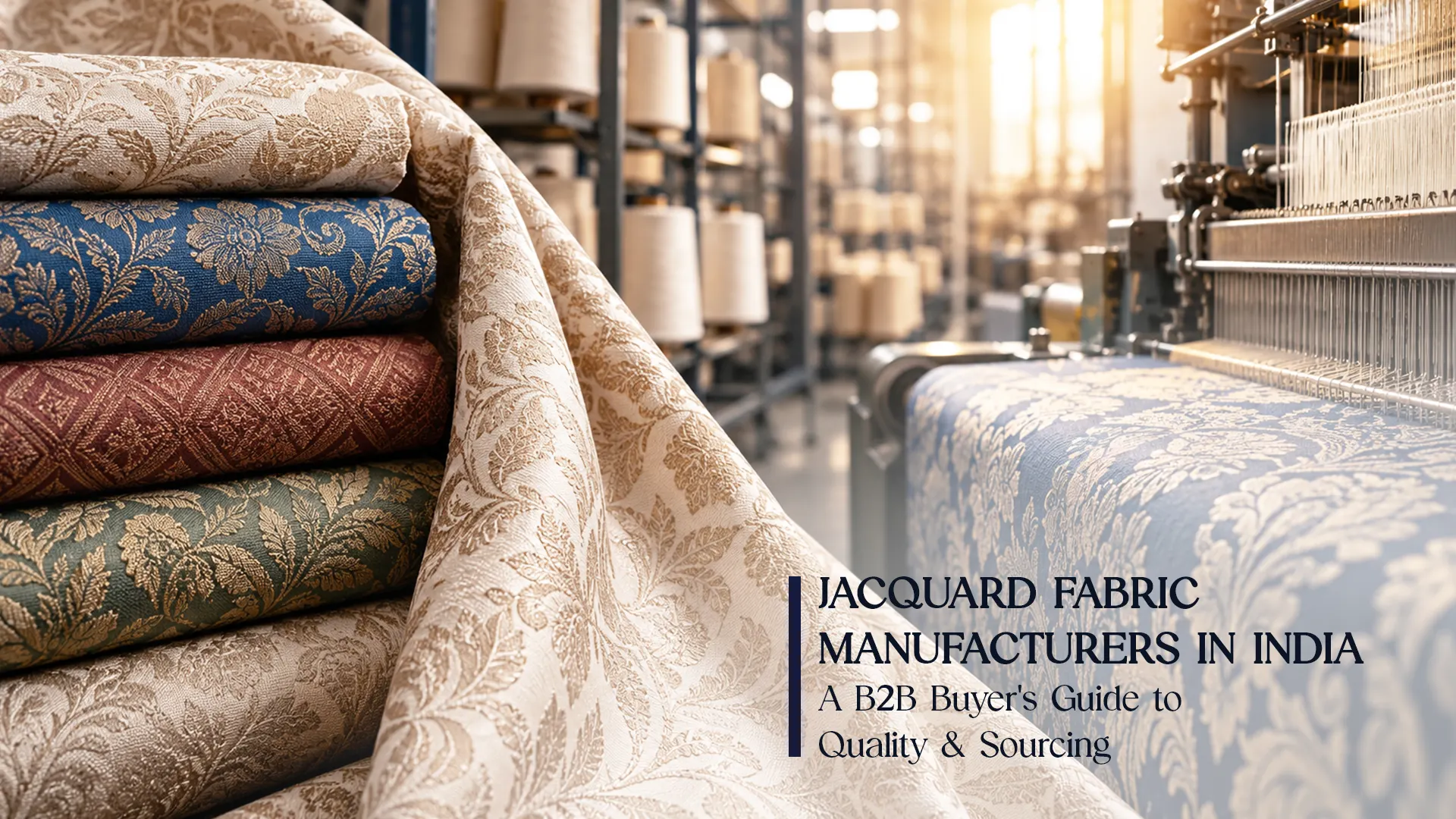
Jacquard Fabric Manufacturers in India: A B2B Buyer’s Guide to Quality & Sourcing
- Kaapd Fabrics
- September 19, 2026
- Polyester Knitted Fabrics, Fabric
- 0 Comments
If you are a fashion brand, home furnishing label, or export house looking to source premium textiles, finding the right jacquard fabric manufacturers in India is one of the most important decisions you will make this sourcing season. Jacquard fabric is prized for its intricate woven patterns, durability, and premium look, but not every mill delivers consistent quality at scale. This guide walks you through what jacquard fabric actually is, why India has become a preferred sourcing destination, and how to evaluate a manufacturer before you commit to a bulk order. Whether you are exploring polyester knitted fabric options for the first time or expanding an existing supplier base, understanding the fundamentals will help you make a confident, informed choice.
What is Jacquard Fabric? Understanding the Weave That Defines Quality
Jacquard fabric gets its name from the Jacquard loom, a weaving technology that allows complex patterns, motifs, and textures to be woven directly into the fabric rather than printed on top of it. This is what separates true jacquard textile from ordinary printed fabric the design is structural, not surface-level, which means it does not fade, crack, or peel with wash and wear. Buyers sourcing for apparel, upholstery, or accessories often specify jacquard material precisely because of this durability and the rich, tactile finish it offers.
Jacquard fabric is not a single material but a weaving technique that can be applied across fibers. You will find cotton jacquard, silk jacquard, and polyester jacquard blends, each suited to different end uses. Cotton jacquard tends to work well for structured apparel and home textiles, silk jacquard is favored for premium ethnic wear and drapery, and polyester jacquard blends offer a cost-effective, easy-care alternative that has grown popular among export-focused brands. Understanding which base fiber suits your product line is the first step before you even begin approaching jacquard fabric suppliers in India.
How Jacquard Weaving Differs from Regular Fabric Weaving
Common Types of Jacquard Fabric Buyers Should Know
This is also why buyers comparing jacquard fabric manufacturers in India often ask for fiber-specific samples before finalizing a supplier. Beyond fiber type, jacquard fabric also varies by weight, weave density, and finish. Lightweight jacquard is common in shirting and dress fabrics, while heavier, densely woven jacquard suits upholstery, curtains, and bags. Some manufacturers also offer stretch jacquard using elastane blends, which has become popular for fitted apparel. When you approach a supplier, being specific about GSM, width, and end use will help them recommend the right patterned fabric construction rather than a generic stock option.
Why B2B Buyers Are Sourcing Jacquard Fabric from India
India has steadily built a reputation as a dependable hub for textile manufacturing, and jacquard production is no exception. The country combines a long-standing weaving heritage with modern, computerized jacquard looms, giving buyers access to both traditional craftsmanship and industrial-scale output. This dual capability is a significant reason international and domestic brands increasingly turn to jacquard fabric manufacturers in India rather than sourcing exclusively from more saturated markets.
Cost efficiency is another major driver. Labor and production costs in India remain competitive relative to markets like Italy or parts of East Asia, without a proportional compromise on weaving quality provided buyers vet their supplier carefully. Many Indian mills have also invested in export compliance, testing infrastructure, and international certifications over the past decade, which has made it considerably easier for overseas buyers to place trust in Indian-sourced jacquard textile without needing an on-ground presence. Visit Our Store.

India's Textile Manufacturing Strengths in Jacquard Production
Textile clusters in states like Gujarat, Tamil Nadu, and Maharashtra have developed strong ecosystems around fabric weaving, dyeing, and finishing, meaning jacquard producers often sit close to complementary processing units. This proximity shortens lead times and simplifies quality control, since buyers are not coordinating across fragmented, disconnected supply chains. Many manufacturers in these clusters have also diversified into blended and technical jacquard fabric to meet growing demand from activewear and technical apparel brands, alongside traditional applications like sarees and furnishings.
Cost Advantage Compared to Global Sourcing Hubs
When comparing India to established jacquard hubs such as Italy, Turkey, or China, the cost per meter for comparable quality is often meaningfully lower, particularly for mid-to-large volume orders. This does not mean every low-cost quote represents good value buyers should always weigh price against sampling accuracy, defect rates, and delivery reliability rather than choosing purely on unit cost. A manufacturer offering the lowest price but inconsistent bulk quality will ultimately cost more in returns, rework, and delayed shipments.
Key Factors to Evaluate When Choosing a Jacquard Fabric Manufacturer
Selecting among jacquard fabric manufacturers in India requires more diligence than a simple price comparison. Because jacquard weaving is technically complex, the gap between an average mill and a genuinely capable one shows up clearly once you move from sample to bulk production. Before finalizing a supplier, it helps to have a quick checklist in mind:
Loom technology and production capacity
Valid quality certifications (OEKO-TEX, ISO, or industry-relevant marks)
MOQ flexibility for trial or smaller orders
Customization support for design, GSM, and width
Sample-to-bulk consistency track record
A few factors consistently separate reliable manufacturers from risky ones.
Production capacity and the age of loom technology matter enormously. Mills running modern, well-maintained jacquard looms can typically hold tighter tolerances on pattern repeat and color consistency across large runs, while older machinery is more prone to drift and defects at scale. It is worth directly asking a prospective supplier about their loom count, average monthly output, and whether they have handled order volumes comparable to yours before.
Quality certifications and compliance documentation are equally important, especially for buyers exporting to regulated markets. Certifications such as OEKO-TEX, ISO, or relevant industry-specific compliance marks signal that a manufacturer has processes in place for consistent testing, not just marketing claims. Buyers should request current certificates directly rather than relying solely on website claims, since documentation can lapse or be outdated.
Minimum order quantity flexibility is another practical consideration, particularly for brands still validating a new product line. Some jacquard textile manufacturers in India enforce rigid MOQs designed for large fashion houses, while others are more accommodating to growing brands placing smaller trial orders before scaling up. Clarifying MOQ terms early avoids wasted negotiation time later. Finally, customization capability around design repeat size, GSM, width, and colorway determines how closely the finished bulk jacquard fabric will match your original brief, so it is worth reviewing a manufacturer’s past custom work before finalizing an order.
Top Applications of Jacquard Fabric Across Industries
This wide range of use cases is exactly why demand for jacquard fabric manufacturers in India continues to grow across sectors. Jacquard fabric’s versatility is part of what keeps demand steady across such different sectors. In fashion, it is used for structured jackets, dresses, and accessories where the woven pattern itself becomes a design feature rather than an added print. Home furnishing is another major application, with jacquard commonly chosen for upholstery, curtains, and cushion covers because the woven construction holds up better to repeated use than printed alternatives.
Ethnic wear remains one of the strongest domestic use cases in India specifically, with jacquard fabric widely used in sarees, dupattas, and other traditional garments where intricate, durable patterning is highly valued. Export-oriented brands sourcing polyester or blended jacquard for activewear and technical apparel have also grown as a segment, since jacquard’s structural pattern-weaving lends itself well to performance fabrics that need to retain design integrity under stretch and wash.
Red Flags to Avoid When Sourcing Jacquard Fabric in India
Not every supplier claiming jacquard capability actually operates dedicated jacquard looms, some outsource weaving to third parties without disclosing it, which can introduce quality inconsistency you have no direct visibility into. One clear warning sign is a mismatch between the sample fabric and bulk shipment; if a supplier cannot explain how they maintain consistency between a small sample run and a large production batch, that is worth probing further before placing a sizable order.
Vague or shifting pricing and lead-time commitments are another red flag. Reliable jacquard fabric manufacturers in India are generally upfront about cost breakdowns, minimum quantities, and realistic production timelines, since they are confident in their process. Suppliers who avoid specifics or repeatedly revise quotes after initial discussion often signal deeper operational inconsistency that will surface later in the relationship.
How to Vet a Jacquard Fabric Manufacturer Before Placing a Bulk Order
Vetting jacquard fabric manufacturers in India properly at this stage saves significant cost and time later. Before committing to a bulk order, always request physical fabric samples rather than relying on photographs, since jacquard’s texture, drape, and pattern depth are difficult to judge digitally. Alongside samples, ask for relevant test reports covering colorfastness, shrinkage, and tensile strength if your end use demands durability, such as upholstery or activewear. A manufacturer confident in their jacquard textile output will usually provide this documentation without hesitation.
It is also worth checking a supplier’s export experience and asking for client references, particularly if you are sourcing internationally for the first time. A manufacturer with a track record of shipping to markets with strict compliance requirements has typically already built the quality control systems you need. Speaking with existing clients, even briefly, often reveals more about consistency and communication than any single sample order can.

Conclusion
Sourcing from the right jacquard fabric manufacturers in India comes down to looking past price alone and evaluating loom technology, certifications, MOQ flexibility, and a proven track record of consistent bulk production. With India’s strong textile manufacturing base and competitive costs, buyers who take the time to vet suppliers properly stand to gain a reliable, long-term sourcing partner rather than a one-off transaction. If you are exploring fabric partners for your next collection or export order, Kaapd works with brands across apparel, home furnishing, and technical textiles to source dependable, quality-tested fabric solutions tailored to your production needs.
FAQs on Jacquard Fabric Manufacturers in India
MOQs vary widely by mill, ranging from a few hundred meters for smaller manufacturers to several thousand meters for larger export-focused units. It is best to confirm this directly with each supplier based on your specific design and fiber requirement.
Lead times depend on order volume, pattern complexity, and loom availability, but buyers should generally expect production timelines to be discussed and confirmed upfront during sampling, since jacquard weaving is more time-intensive than plain weaving.
Yes, many jacquard textile manufacturers in India offer custom pattern development, though capability varies by mill. Reviewing a supplier’s past custom projects is the most reliable way to gauge whether they can execute your specific design brief.
Related Posts

- Kaapd Fabrics
- July 25, 2026
Why Fast Fabric Sampling Helps Garment Manufacturers Launch Collections Faster
Building an apparel brand today is not easy. ..

- Kaapd Fabrics
- May 30, 2026
Looking for Garment Manufacturers for Your Apparel Brand? Here’s How the Right B2B Partner Can Help You Scale
Building an apparel brand today is not easy. ..

- Kaapd Fabrics
- August 22, 2026
Which GSM Is Best for Sportswear Fabric? Complete Buying Guide
Building an apparel brand today is not easy. ..


