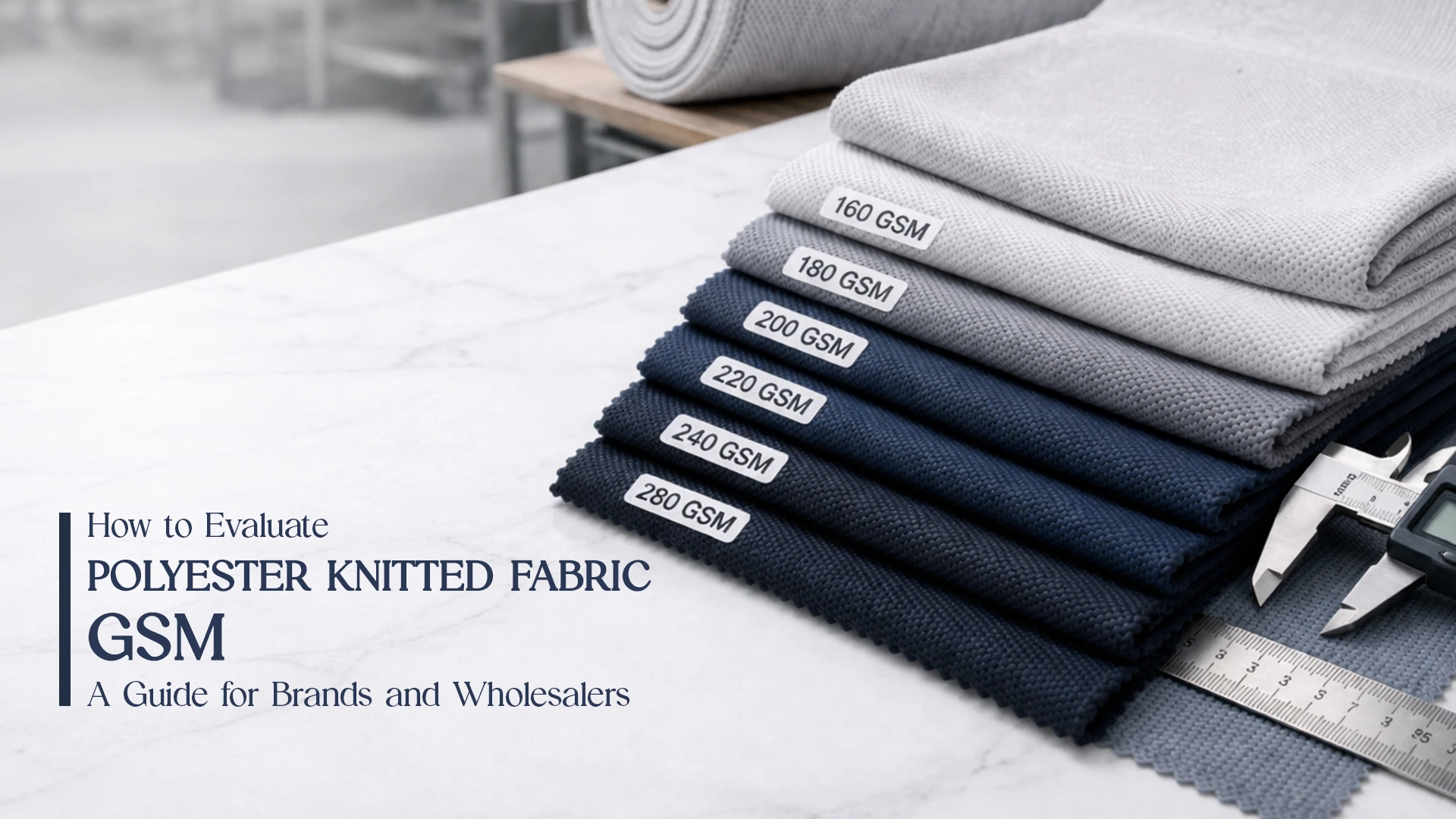
How to Evaluate Polyester Knitted Fabric GSM: A Guide for Brands and Wholesalers
- Kaapd Fabrics
- May 18, 2026
- Polyester Knitted Fabrics, Fabric
- 0 Comments
Introduction
Polyester knitted fabrics are widely used in the fashion, sportswear, and textile industries. For brands and wholesalers, understanding fabric quality is very important before purchasing or manufacturing garments. One of the most important factors that determines fabric quality is GSM (grams per square meter).
Polyester knitted fabric GSM tells you how heavy, dense, or lightweight a fabric is. It directly affects the fabric’s durability, comfort, and end use. If the GSM is not correct, the final product may not match the expectations of customers or retailers.
In this guide, we will explain how to evaluate polyester knitted fabric GSM, why it matters for brands and wholesalers, and how you can check it correctly before placing bulk orders.
What is GSM in Polyester Knitted Fabric?
GSM stands for grams per square meter, which means the weight of fabric measured in one square meter area. It is one of the most commonly used measurements in the textile industry to understand the thickness and density of fabric.
When we talk about polyester knitted fabric GSM, we are referring to the weight of knitted polyester fabric per square meter. A higher GSM means the fabric is thicker and heavier, while a lower GSM indicates a lighter and more breathable fabric.
This measurement helps manufacturers, designers, and wholesalers decide whether a fabric is suitable for a particular product such as sportswear, t-shirts, jackets, or uniforms.
For example, lightweight polyester fabrics are ideal for activewear, while heavier fabrics may be used for winter garments or upholstery.
Why GSM Matters for Brands and Wholesalers
For brands and wholesalers, GSM plays a very important role in product quality, pricing, and customer satisfaction. Choosing the right GSM ensures that the final garment performs well and meets market expectations.
When sourcing fabrics in bulk, many businesses check polyester knitted fabric GSM to maintain consistency across production batches. Even a small variation in GSM can affect how the garment looks, feels, and performs.
GSM also impacts production cost. Higher GSM fabrics require more yarn and material, which increases the cost of the fabric.
Brands that focus on quality usually test GSM carefully before approving fabrics for manufacturing.
Key reasons GSM is important:
- Ensures consistent fabric quality
- Helps determine fabric durability
- Affects garment comfort and performance
- Influences fabric cost and pricing
Standard GSM Range for Polyester Knitted Fabrics
Different types of garments require different GSM ranges. Understanding these ranges helps brands and wholesalers choose the correct material for their products.
For example, sportswear fabrics usually have a lower GSM because they need to be breathable and lightweight. On the other hand, sweatshirts or jackets require heavier fabrics.
Common GSM ranges used in polyester knitted fabrics include:
- 120–160 GSM – Lightweight fabrics for sportswear and activewear
- 160–200 GSM – Medium weight fabrics for t-shirts and casual wear
- 200–300 GSM – Heavy fabrics for sweatshirts and winter garments
Selecting the correct polyester knitted fabric GSM ensures the garment performs well for its intended use.
Methods to Evaluate Polyester Knitted Fabric GSM
Brands and wholesalers use different methods to evaluate GSM during fabric inspection. These methods help ensure that the fabric meets the required specifications before production begins.
The most common and reliable method is the GSM cutter and weighing scale method, which is widely used in textile testing laboratories.
Other methods may include manual calculations or supplier-provided fabric testing reports.
1.GSM Cutter Method
This is the most accurate and commonly used method in textile factories and testing labs.
A circular GSM cutter is used to cut a small sample of fabric from the material. The sample usually represents one hundredth of a square meter. The sample is then weighed using a digital scale, and the GSM is calculated.
This method gives quick and reliable results and is often used when evaluating polyester knitted fabric GSM for bulk orders.
2. Fabric Sample Weighing Method
In this method, a fabric sample with a known measurement (for example 10 cm × 10 cm) is cut and weighed. The weight is then multiplied to calculate the GSM for one square meter.
Although this method is simple, it may be slightly less accurate compared to professional GSM testing tools.
3. Laboratory Testing
Large brands and textile buyers often send fabric samples to certified textile laboratories for testing. These labs use professional equipment and standardized procedures to measure GSM and other fabric properties.
Laboratory testing provides reliable data and helps brands maintain quality control in large-scale production.
Key Factors That Affect Polyester Knitted Fabric GSM
Many technical factors influence the final GSM of knitted polyester fabrics. Understanding these factors helps buyers and manufacturers maintain consistent fabric quality.
The structure and production process of the fabric can significantly affect the weight and density.
Important factors include:
- Yarn thickness (denier or count)
- Knitting structure (single jersey, interlock, rib)
- Fabric finishing processes
- Fabric tension during knitting
For example, thicker yarns or tighter knitting structures usually result in higher polyester knitted fabric GSM.
Common Mistakes Brands Make When Evaluating Fabric GSM
Sometimes brands and wholesalers rely only on supplier information without verifying the GSM themselves. This can lead to quality problems later during garment production.
Another common mistake is ignoring GSM tolerance levels. Small variations in fabric weight can occur during manufacturing, and these variations should be within acceptable limits.
Some buyers also fail to test multiple samples from different fabric rolls, which may lead to inconsistent quality.
To avoid these issues, it is always recommended to perform proper fabric testing before finalizing bulk purchases.
Tips for Brands and Wholesalers When Checking Fabric GSM
Evaluating fabric GSM correctly helps brands maintain product quality and avoid production issues.
Some useful tips include:
- Always test fabric samples before bulk purchasing
- Check GSM from multiple fabric rolls
- Ask suppliers for fabric testing reports
- Maintain a standard GSM tolerance range
Following these practices ensures that the polyester knitted fabric GSM meets your product requirements and quality standards.
Conclusion
Understanding and evaluating polyester knitted fabric GSM is essential for brands and wholesalers who want to maintain consistent product quality. GSM helps determine the weight, durability, and performance of the fabric, which directly affects the final garment.
By learning how to measure GSM and understanding the factors that influence it, businesses can make better sourcing decisions and avoid quality issues during production.
Whether you are a fashion brand, garment manufacturer, or fabric wholesaler, evaluating fabric GSM correctly will help you choose the right material for your products and deliver better value to your customers. Know more.
Frequently asked question
Polyester knitted fabric GSM refers to the weight of polyester knitted fabric per square meter, which indicates how thick or lightweight the fabric is.
GSM helps determine the durability, comfort, and suitability of the fabric for different types of garments.
Brands usually measure GSM using a GSM cutter and digital weighing scale, or they send samples to textile testing laboratories.
Most polyester t-shirts typically use fabrics between 160 GSM and 180 GSM, depending on the brand and garment style.
Yes, small variations can occur during manufacturing, which is why quality testing and GSM tolerance levels are important for brands and wholesalers.
Related Posts

- Kaapd Fabrics
- July 11, 2026
Common Fabric Quality Problems in Bulk Orders (And How to Avoid Them)
Building an apparel brand today is not easy. ..

- Kaapd Fabrics
- August 22, 2026
Which GSM Is Best for Sportswear Fabric? Complete Buying Guide
Building an apparel brand today is not easy. ..

- Kaapd Fabrics
- September 4, 2026
Knitted Fabric Manufacturers in India: Complete B2B Guide to Choosing the Right Supplier
Building an apparel brand today is not easy. ..


